NEXOFEED / products
Automated Parts Feeding System
In the wave of Industry 4.0 and intelligent manufacturing, traditional manual feeding methods can no longer meet modern production demands for efficiency, precision, and stability. As the core infrastructure of industrial automated production, the automatic feeding system acts li…
Evaluate with my part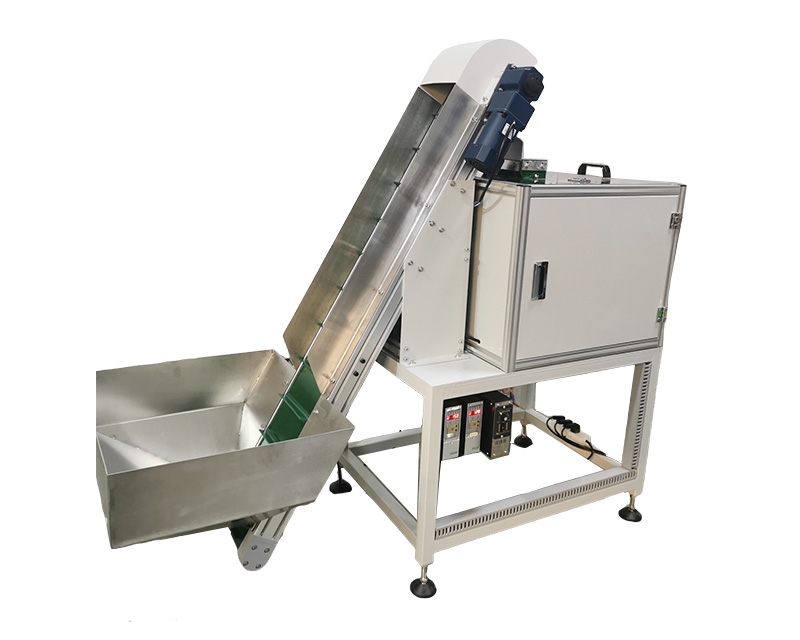
Overview
In the wave of Industry 4.0 and intelligent manufacturing, traditional manual feeding methods can no longer meet modern production demands for efficiency, precision, and stability. As the core infrastructure of industrial automated production, the automatic feeding system acts like a "blood delivery network" on the production line, delivering raw materials or components to each production station in a precise and efficient manner, providing continuous power support for intelligent manufacturing. From 3C electronics manufacturing to the automotive industry, from food processing to pharmaceutical production, automated feeding systems are reshaping the operational model of industrial production with their powerful technological advantages.
The automatic feeding system is not a single piece of equipment, but a complex automation system composed of four core modules: storage unit, conveying unit, sorting unit, and control system. Each module operates in coordination to achieve full-process automated management of materials from warehousing to production workstations. Storage units are the "transfer stations" for materials, and can be divided into various forms such as automated warehouses, silos, and hoppers based on material characteristics. For example, in the injection molding industry, powdered plastic raw materials are usually stored in sealed silos, where material levels are monitored in real time through level sensors; In the electronics manufacturing sector, components are stored in high-bay warehouses with constant temperature and humidity, and are used for precise access and retrieval in conjunction with AGVs (automated guided vehicles). The conveying unit is responsible for transporting materials from the storage end to the production end. Common conveying methods include belt conveying, chain conveying, pneumatic conveying, and vibrating conveying. Belt conveying is suitable for large-volume materials of regular shapes, such as appliance casings; Chain conveyors are commonly used for heavy-duty components, such as automobile engine blocks; Pneumatic conveying, thanks to its pipeline transport characteristics, holds an advantage in the transportation of powdered materials in the food and pharmaceutical industries; Vibrating conveying uses high-frequency vibrations to achieve the orderly arrangement of small parts and is widely used in the feeding process of precision components. The sorting unit is the "intelligent brain" of the automatic feeding system, using technologies such as visual recognition, weight detection, and electromagnetic induction to classify and orient materials. For example, on the 3C product assembly line, the visual recognition system can detect the model and polarity of electronic components within milliseconds, and use robotic arms to accurately sort them to the corresponding workstations; In express logistics centers, the automated sorting system uses cross-belt sorting machines based on the barcode information on parcels to achieve efficient sorting of tens of thousands of items per hour. The control system, as the nervous center of the entire system, is usually built based on PLCs (Programmable Logic Controllers) or industrial computers. Sensors collect real-time data on material status, equipment operating parameters, and other data, combined with preset production process requirements, automatically adjusting the operating rhythm of each unit. When a workstation on the production line experiences material shortages, the control system immediately dispatches storage units to replenish materials and adjusts the conveying speed to ensure production continuity.
The automated feeding system completely eliminates reliance on manual labor, achieving full automation from material storage and delivery to sorting. At an automotive parts factory, the automated feeding system uses the coordination of AGVs, gantry manipulators, and conveyor lines to transport engine parts directly from the warehouse to the assembly station. The entire process requires no manual intervention, improving production efficiency by 60% and reducing labor costs by 45%. The system can also seamlessly integrate with MES (Manufacturing Execution System) and ERP (Enterprise Resource Planning) systems, enabling real-time exchange of production data and providing foundational support for smart factory construction.
For the precision manufacturing industry, the accuracy of material feeding directly affects product quality. The automatic feeding system uses closed-loop control technology to keep material conveying errors within a minimal range. On semiconductor packaging production lines, vacuum adsorption feeding systems can place chips as small as 0.5mm × 0.5mm onto substrates with ±0.02mm precision; In lithium battery production, metering feeding devices precisely control the electrolyte delivery volume through screw pumps, with an error of no more than ±1%, ensuring consistent battery performance.
Facing the production demands of multiple varieties and small batches, the automatic feeding system demonstrates strong flexible adaptation capabilities. Through modular design and parametric programming, the system can quickly switch between material types and feeding modes. For example, on a small appliance production line, the same automatic feeding system can complete the production switching of five products, including electric kettles and rice cookers, within 30 minutes by changing fixtures and adjusting sorting procedures, increasing equipment utilization to 85% and effectively reducing the cost of model changeover.
Features
- Process-configured architecture
- Documented mechanical and electrical interfaces
- Sensor and control options available
Benefits
- Reduces repetitive manual handling
- Presents parts consistently to the next process
- Supports integration with automated equipment
PARTS
Supported parts
- Parts evaluated according to the assembly process
- Components with special handling requirements
- Applications combining feeding, sorting and conveying
Want to evaluate this solution with your part?
Send photos, dimensions, orientation and rate. We will respond with the next technical questions.
Request a quote