NEXOFEED / products
Automated Parts Feeding System for Robotics
As the wave of intelligent manufacturing sweeps the globe, industrial production is rapidly transforming toward efficiency, precision, and intelligence. As a key link connecting all production stages, the automatic feeding system breaks the bottleneck of traditional manual feedin…
Evaluate with my part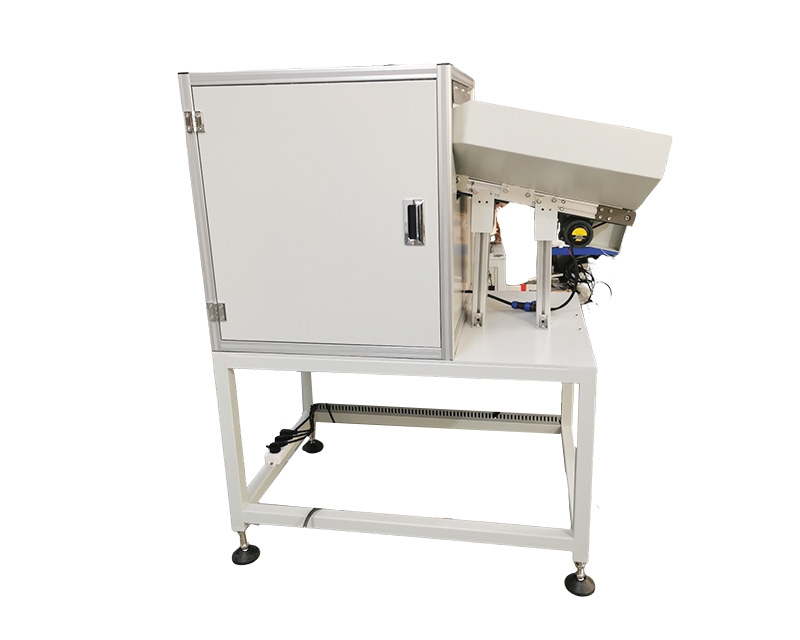
Overview
As the wave of intelligent manufacturing sweeps the globe, industrial production is rapidly transforming toward efficiency, precision, and intelligence. As a key link connecting all production stages, the automatic feeding system breaks the bottleneck of traditional manual feeding efficiency and large errors, becoming an indispensable part of modern industrial production. Through advanced technology and precise design, it achieves full automation of the entire process from storage and transportation to distribution, providing strong support for companies to improve production efficiency, reduce costs, and ensure product quality. This article will provide an in-depth analysis of the structure, working principles, core advantages, application scenarios, challenges faced, and future development trends of automatic feeding systems, giving you a comprehensive understanding of this core hub of industrial production.
An automatic feeding system refers to a comprehensive system that uses automated equipment and intelligent control systems to achieve automatic storage, conveying, measurement, and distribution of materials. It can precisely and continuously deliver various materials (such as granular, powder, block, flake, etc.) to processing equipment or assembly stations according to production process requirements, replacing traditional manual handling and feeding methods. This system integrates multidisciplinary technologies including mechanical, electrical, electronic, sensor, and computer control, ensuring efficient and stable operation of the production process through real-time monitoring and precise control of materials.
The development of automatic feeding systems is closely linked to the process of industrial automation. In early industrial production, material supply mainly relied on manual operation, resulting in low efficiency and high labor intensity. With the advancement of the Industrial Revolution and the development of mechanical transmission technology, simple mechanical feeding equipment such as belt conveyors and screw conveyors emerged, initially achieving semi-automated material conveying. Entering the mid to late 20th century, the rise of electronic and computer technology brought a qualitative leap to automatic feeding systems. The application of sensors and programmable logic controllers (PLCs) enables the feeding system to automatically detect and control feeding, automatically adjusting feeding parameters based on material status and production requirements. In the era of intelligent manufacturing, the integration of new technologies such as the Internet of Things, artificial intelligence, and big data has driven automatic feeding systems toward intelligence and flexibility. They not only enable remote monitoring and fault warnings, but also automatically optimize feeding strategies based on changes in production tasks.
The storage unit is the material "warehouse" of the automated feeding system, used to store materials to be processed or conveyed. They come in various forms, commonly including silos, hoppers, and storage tanks. Silos are usually used to store granular and powdered materials, and can be classified by structure into silos, square silos, etc., with large storage capacities; The hopper is suitable for storing small to medium batches of materials and is easy to connect with conveying equipment; Storage tanks are mainly used to store liquid or gaseous materials. To ensure the safety and stability of material storage, storage units are often equipped with level sensors to monitor material inventory in real time. When the material reaches the preset upper or lower limit, the sensor sends a signal to the control system to add or stop feeding.
The conveyor unit is responsible for moving materials from the storage unit to designated processing or assembly locations. Common conveying methods include belt conveying, screw conveying, pneumatic conveying, and vibrating conveying. Belt conveying features large conveying capacity and smooth operation, suitable for long-distance transport of block and granular materials; Screw conveying pushes materials forward by rotating screw blades, commonly used for sealed conveying of powdered materials; Pneumatic conveying uses aerodynamics to move materials through pipelines, suitable for materials with high environmental requirements and those prone to dust; Vibration conveying relies on vibrations generated by the vibration source to move materials within the conveying trough, commonly used for transporting small components or fine materials. Different conveying methods can be flexibly combined according to material characteristics and production needs to achieve better conveying results.
Features
- Part-specific orientation tooling
- Adjustable vibration and flow control
- Line-integration-ready interface
Benefits
- Reduces repetitive manual handling
- Presents parts consistently to the next process
- Supports integration with automated equipment
PARTS
Supported parts
- Metal or plastic parts validated through sample testing
- Components requiring repeatable orientation
- Small and medium parts suitable for vibratory feeding
Want to evaluate this solution with your part?
Send photos, dimensions, orientation and rate. We will respond with the next technical questions.
Request a quote