NEXOFEED / products
Automated Step Feeding System
The feed pusher is an automated device used to push bulk or stacked materials to designated stations at a set time, widely used in industries such as electronics manufacturing, machining, medical devices, food packaging, and new energy. It uses a mechanical structure to achieve a…
Evaluate with my part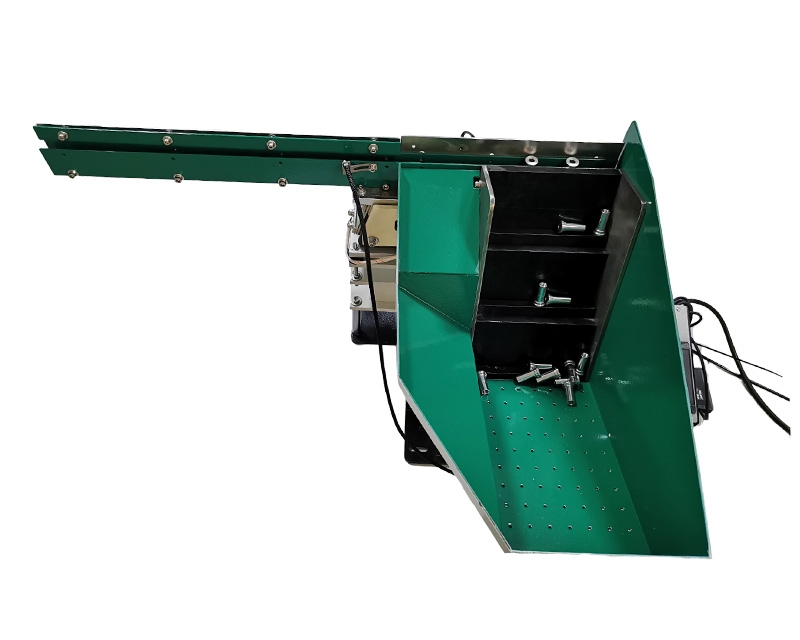
Overview
The feed pusher is an automated device used to push bulk or stacked materials to designated stations at a set time, widely used in industries such as electronics manufacturing, machining, medical devices, food packaging, and new energy. It uses a mechanical structure to achieve automatic material conveying and positioning, replacing manual repetitive feeding tasks, and is one of the common automated feeding devices in modern production lines.
With the increasing level of production automation today, feeding and pushing machines are playing an increasingly important role in manufacturing. It not only significantly improves feeding efficiency and ensures continuous operation of the production line, but also improves the working environment, reduces manual labor intensity, and guarantees stability and consistency in product assembly.
When the equipment is started, the push plate moves forward along the guide rail driven by the drive system, pushing the material to be processed forward. After pushing is complete, the push plate automatically returns to its position, preparing for the next cycle. The entire process is coordinated by the control system and monitored by sensors to monitor material status, achieving stable and continuous feeding operations.
Modern feed pusher machines can be combined with visual recognition systems and sensor monitoring systems to automatically detect material position and posture, reducing manual intervention. The control system can achieve remote monitoring, operation data collection, and automatic adjustment through a human-machine interface, enhancing production visualization and controllability.
At the same time, some equipment supports modular design, allowing quick replacement of push plate or feeding modules to accommodate different product transitions and enhance production flexibility. In the future, feeding and pushing machines will become key nodes in intelligent production lines, collaborating with robots, AGV conveyor systems, and other equipment to achieve fully unmanned production throughout the process.
Features
- Step lifting with less continuous vibration
- Part-configured hopper and discharge
- Low- and full-level sensing available
Benefits
- Reduces repetitive manual handling
- Presents parts consistently to the next process
- Supports integration with automated equipment
PARTS
Supported parts
- Long, heavy or regularly shaped parts
- Shafts, bolts and cylindrical components
- Parts sensitive to noise or continuous vibration
Want to evaluate this solution with your part?
Send photos, dimensions, orientation and rate. We will respond with the next technical questions.
Request a quote