NEXOFEED / products
Battery Desiccant Vibratory Bowl Feeder
In the production process of new energy batteries, every step is crucial; any minor mistake can affect the battery's performance and quality. Among these, precise placement of desiccants is a key step to ensure stable internal battery environments and extend battery lifespan. Mea…
Evaluate with my part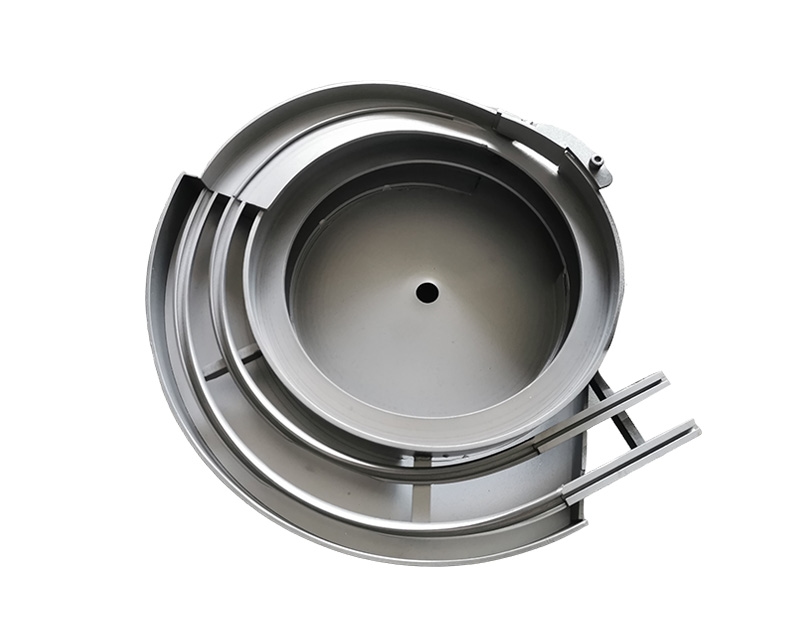
Overview
In the production process of new energy batteries, every step is crucial; any minor mistake can affect the battery's performance and quality. Among these, precise placement of desiccants is a key step to ensure stable internal battery environments and extend battery lifespan. Meanwhile, the vibratory bowl feeder for new energy battery desiccant is playing an increasingly important role as the core equipment for automating and precise delivery of desiccants. This article will delve into the working principle, structural composition, application advantages, common faults, and maintenance methods of the new energy battery desiccant vibratory bowl feeder, helping readers gain a comprehensive understanding of this indispensable device in new energy battery production.
In the electromagnetic vibratory bowl feeder, pulse electromagnets are installed below the hopper. When the power is turned on, the magnetic field generated by the electromagnet causes the hopper to vibrate in the vertical direction. At the same time, due to the action of the inclined spring plate, the hopper will twist and vibrate around its vertical axis. This composite vibration mode causes the desiccant placed inside the hopper to be subjected to vibrational forces. Under the combined influence of vibration and gravity, the desiccant begins to ascend along a spiral trajectory. During the ascent process, the desiccant undergoes a series of carefully designed track structures. These tracks screen and adjust the desiccant's posture to ensure it automatically enters subsequent assembly or processing positions in a uniform state according to specific requirements, thereby enabling orderly and accurate conveying of the desiccant in an orderly and directional manner. For example, in some common electromagnetic new energy battery desiccant vibratory bowl feeder, by adjusting the magnitude and frequency of the electromagnet's current, the hopper's vibration amplitude and frequency can be precisely controlled, thereby meeting the delivery needs of different types and sizes of desiccants.
The piezoelectric vibratory bowl feeder utilizes the inverse piezoelectric effect of piezoelectric ceramics. Piezoelectric ceramics serve as the driving source. When an alternating electric field is applied to the piezoelectric plate, the piezoelectric plate will undergo corresponding expansion and contraction deformation according to changes in the electric field, resulting in vibration. This vibration acts as a driving source transmitted to the trough, thereby enabling the conveying of the material (i.e., the desiccant). Piezoelectric vibratory bowl feeder offer many unique advantages. First, because it uses piezoelectric plates as the driving source, it does not require complex motors, electromagnetic exciters, or other mechanical transmission components, nor do it have shafts, rods, belts, or other mechanical transmission parts, making the entire structure simpler. It is not only easy to manufacture but also convenient for installation and maintenance. Second, by changing any one parameter in the drive signal—amplitude, pulse width, or frequency—the conveying rate can be flexibly adjusted, featuring multiple control parameters and good controllability. Third, piezoelectric vibratory bowl feeder can operate in low-frequency or ultrasonic ranges, generating less noise during operation. Fourth, it can operate in resonant or non-resonant states, consuming relatively less energy. In addition, the piezoelectric vibratory bowl feeder does not generate electromagnetic interference fields, is not affected by external electromagnetic interference signals, has no rotational inertia, and has almost no acceleration or deceleration processes. It starts and stops quickly, and responds quickly. However, piezoelectric vibratory bowl feeder also have certain limitations; their driving force is relatively weak and they are not suitable for conveying heavy materials. Therefore, in new energy battery desiccant conveying scenarios, they are mainly used for micro-or precision conveying. For example, for micro desiccant packages used in some ultra-small new energy batteries, the piezoelectric vibratory bowl feeder can precisely achieve orderly delivery of individual desiccant.
The hopper is a container for storing desiccant, and its design directly affects the storage capacity and delivery efficiency of the desiccant. Common types of hoppers include cylindrical hoppers, spiral hoppers, wire hoppers, tapered hoppers, and aluminum alloy pans. Different types of hoppers are suitable for desiccants of various shapes and characteristics. For example, cylindrical hoppers are suitable for storing granular or small packages of desiccant, and their large capacity design reduces the frequency of feeding; The spiral hopper helps guide the desiccant upward along a specific spiral path, improving the orderliness of conveying; Aluminum alloy discs, due to their lightweight material and excellent wear resistance, are widely used in vibratory bowl feeder that require high vibration transmission. The internal structure of the hopper is usually carefully designed, with some guide plates or protrusions to further optimize the desiccant's movement trajectory during vibration, preventing accumulation or blockage inside the hopper.
The chassis is the fundamental component that supports the entire vibratory bowl feeder and also plays an important role in vibration transmission. Common chassis types include front-tie chassis, side-tie chassis, piezoelectric chassis, precision chassis, Kobelco chassis, and square chassis. Forward-tension and side-tension chassis mainly transmit and adjust vibrations through different tension directions to adapt to different installation environments and vibration requirements; The piezoelectric chassis matches the working principle of the piezoelectric vibratory bowl feeder, better transmitting the vibrations generated by the piezoelectric ceramics to the hopper; Precision chassis typically use high-precision manufacturing processes and materials to ensure stability and accuracy during operation, which is especially important for applications like new energy battery desiccants, which require high conveying accuracy; Kobelco chassis may be a design unique to certain brands, offering specific performance advantages such as higher strength and better vibration damping characteristics; Square chassis are more suitable for situations requiring specific installation space or structural layouts, and their shape design allows for easy integration with other equipment. The chassis material is generally chosen from metals with high strength and stability, such as cast iron or steel plates, to ensure it can withstand various forces generated during operation.
Features
- Part-specific orientation tooling
- Adjustable vibration and flow control
- Line-integration-ready interface
Benefits
- Reduces repetitive manual handling
- Presents parts consistently to the next process
- Supports integration with automated equipment
PARTS
Supported parts
- Metal or plastic parts validated through sample testing
- Components requiring repeatable orientation
- Small and medium parts suitable for vibratory feeding
Want to evaluate this solution with your part?
Send photos, dimensions, orientation and rate. We will respond with the next technical questions.
Request a quote