NEXOFEED / products
Copper Part Sorting Bowl Feeder
Amid the wave of manufacturing transforming toward intelligence and refinement, copper parts, as a key foundational material in electrical, mechanical, and electronic fields, have quality and precision that directly affect the performance of end products. The copper parts sorting…
Evaluate with my part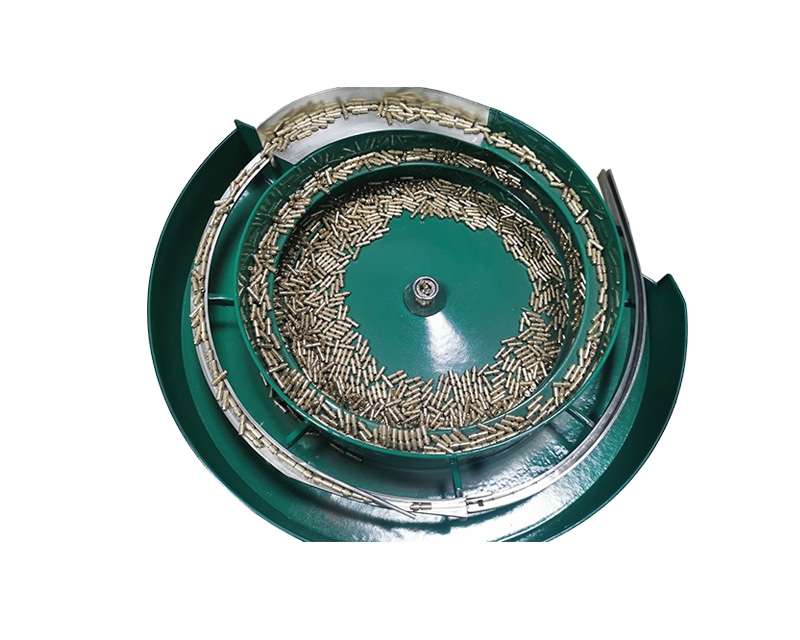
Overview
Amid the wave of manufacturing transforming toward intelligence and refinement, copper parts, as a key foundational material in electrical, mechanical, and electronic fields, have quality and precision that directly affect the performance of end products. The copper parts sorting machine vibratory bowl feeder, as an automated device integrating material conveying, precision sorting, and quality inspection, has become the core equipment on copper product processing production lines due to its unique technical characteristics. This article will provide an in-depth analysis of the working principle, core advantages, application scenarios, challenges, and development trends of copper parts screening machine vibratory bowl feeder, comprehensively showcasing their significant value in modern industrial production.
The copper sorting machine vibratory bowl feeder is a composite device that integrates mechanical vibration, electrical control, sensor detection, and intelligent sorting technology. Its workflow covers four core steps: vibration conveying, directional sorting, quality inspection, and precise sorting. After the equipment is started, a vibration motor or piezoelectric ceramic plate installed at the bottom serves as the power source and begins working. The vibrating motor generates centrifugal force by rotating the eccentric block at high speed, causing vibration of the vibration disk; Piezoelectric ceramic sheets use the inverse piezoelectric effect, generating mechanical deformation under the influence of an electric field to drive vibration. Vibrations of specific frequencies and amplitudes are transmitted through the spring plate to the hopper, causing the haphazardly stacked copper parts to move upward along the spiral track. Due to the diverse shapes of copper parts (such as screws, nuts, washers, irregular parts, etc.), vibration intensity and frequency must be precisely controlled according to the weight and size of the copper parts to avoid collision damage. On the spiral track, the sorting structure designed based on the geometric characteristics of the copper part plays a directional role. For example, for copper screws, the track groove fits the screw thread type, allowing only screws with the correct thread direction to pass through; For copper gaskets, differences in flatness and thickness are utilized to select components with correct posture through specific gaps. Copper parts with unqualified posture fall into the hopper due to gravity or vibration, and after multiple rounds of screening, precise directional arrangement is achieved. Once the copper parts are oriented into the inspection area, multiple inspection modules are integrated here. The optical inspection module uses high-definition industrial cameras and image processing algorithms to detect surface defects (scratches, sand holes, oxide spots, etc.) and dimensional accuracy (diameter, thickness, length) of copper parts; The eddy current detection module uses electromagnetic induction principles to detect internal cracks, looseness, and other issues in copper parts; Weighing sensors monitor copper weight in real time and screen for products that exceed the required weight. All detection data are transmitted synchronously to the control system and compared with preset standards. Then, the control system regulates the sorting mechanism based on the test results. Qualified copper parts are conveyed by a direct vibrator or blowing device to the qualified goods collection area; Non-conforming copper parts trigger pneumatic push rods or sorting baffles, separating them into the scrap area. Throughout the process, the PLC (Programmable Logic Controller) and touchscreen human-machine interface enable real-time parameter adjustment to ensure sorting efficiency and accuracy.
The vibratory bowl feeder of the copper sorting machine achieves micron-level detection accuracy, with dimensional inspection errors controlled at ±0.02mm, weight detection accuracy reaching ±0.1g, and surface defect detection resolution up to 0.1mm². Taking copper terminals for new energy vehicle charging piles as an example, the vibratory bowl feeder can accurately screen products with hole diameters and thicknesses that meet requirements and have no surface oxidation, increasing the terminal soldering yield from 85% manual screening to 99.2%, effectively ensuring electrical connection stability.
Compared to manual sorting, the vibratory bowl feeder improves processing efficiency by 8 to 10 times, capable of inspecting and sorting 100 to 150 copper parts per minute. In continuous operation mode, the equipment's mean time to failure (MTBF) exceeds 12,000 hours, and together with automated production lines, it achieves 24-hour uninterrupted production. After an electronic connector manufacturer introduced vibratory bowl feeder, the daily output of copper contacts increased from 30,000 to 250,000 pieces, significantly shortening the order delivery cycle.
For the characteristics of copper parts in different industries, the vibratory bowl feeder supports full-process customization. In terms of mechanical structure, the track inclination angle and sorting trough size can be adjusted; The detection system supports multi-sensor combinations, such as optical + eddy current composite detection; The software system features rapid parameter switching, allowing inspection programs for different copper parts specifications to be switched within 5 minutes. In bathroom hardware production, vibratory bowl feeder can simultaneously accommodate sorting needs for various products such as round copper nuts and square copper washers.
Features
- Part-specific orientation tooling
- Adjustable vibration and flow control
- Line-integration-ready interface
Benefits
- Reduces repetitive manual handling
- Presents parts consistently to the next process
- Supports integration with automated equipment
PARTS
Supported parts
- Metal or plastic parts validated through sample testing
- Components requiring repeatable orientation
- Small and medium parts suitable for vibratory feeding
Want to evaluate this solution with your part?
Send photos, dimensions, orientation and rate. We will respond with the next technical questions.
Request a quote