NEXOFEED / products
Flexible Parts Feeder
Amid the wave of Industry 4.0 and intelligent manufacturing, manufacturers are increasingly reliant on automated equipment, seeking efficient, precise, and highly flexible production solutions. As key equipment on automated production lines, flexible feeding machines have attract…
Evaluate with my part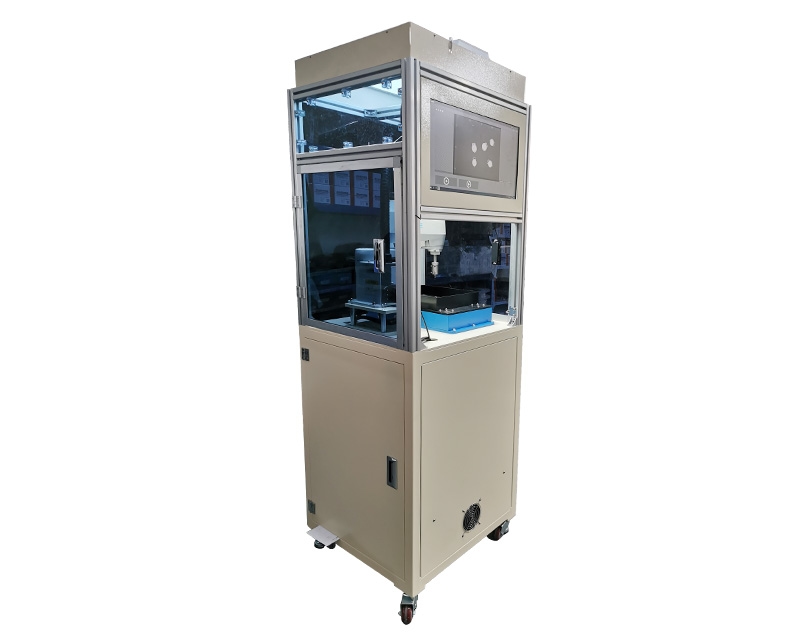
Overview
Amid the wave of Industry 4.0 and intelligent manufacturing, manufacturers are increasingly reliant on automated equipment, seeking efficient, precise, and highly flexible production solutions. As key equipment on automated production lines, flexible feeding machines have attracted much attention in recent years and are gradually changing traditional production models. This article will delve into the working principles, technical advantages, application scenarios, and future development trends of flexible feeding machines, giving you a comprehensive understanding of this star product in the field of industrial automation.
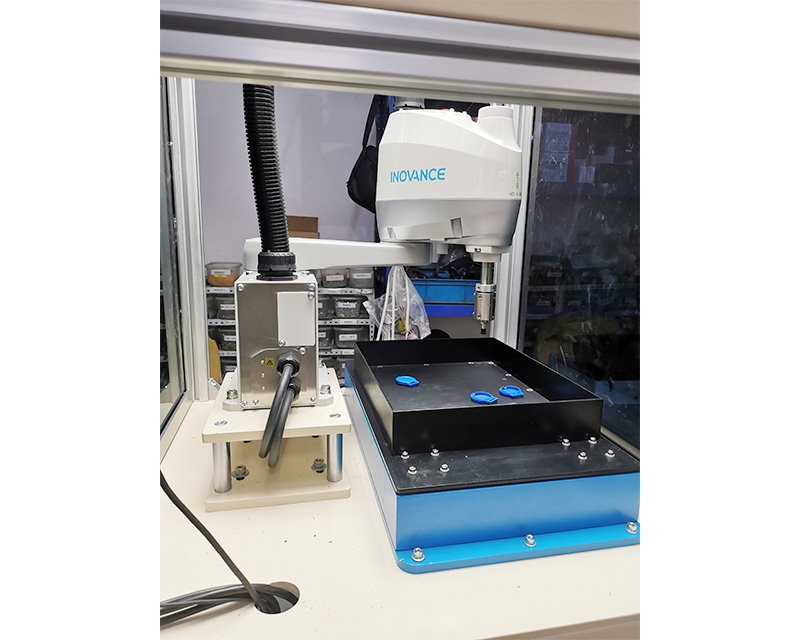
The flexible feeding machine is a highly intelligent automated device, mainly composed of the silo, flexible feeding tray, CCD camera, robotic mobile mechanism, and PC vision positioning system control. The workflow is roughly as follows: First, manually add parts to the silos. The silo uses its own vibration to smoothly transport parts to the flexible feeder tray. The flexible feeder, also known as the flexible feeding tray, is considered the core component of the flexible feeding machine. It can move parts along the surface of the tray in any direction through various vibration modes, achieving automatic separation and orientation through vibration and flipping, allowing parts to reach the customer's desired posture. During this process, the flexible feeding pan uses a voice coil motor as the power source, with four coil motors distributed at the four inner corners of the flexible vibratory bowl feeder. The voice coil motor is controlled by a flexible vibratory bowl feeder controller, adjusting the feeding tray's vibration frequency to approach the material's natural frequency, triggering material resonance, which keeps the material in motion and enables rapid and effective posture adjustment. Then, when the part achieves the appropriate posture on the flexible feeding tray, the CCD camera begins to take action. It captures the shape and position information of parts inside the window by capturing the material palette and converts this information into coordinate data to send to the robot's moving mechanism. Here, visual recognition and positioning technology are the key steps. After the camera takes photos of the material, the software recognizes the image features and converts them into digital signals, thereby obtaining data such as the material's pose in the camera coordinate system. Then, through specific algorithms and calibration, the image coordinates are converted into robot-level coordinates that the robot can recognize, providing precise guidance for the robot's grasping actions. Then, based on coordinate data sent by the vision system, the robot quickly and accurately identifies the part's position and picking direction, moves it from the feeder pallet surface to pick up the part, and performs subsequent operations such as array placement or assembly. The entire process is seamless, achieving automated flow from chaotic to orderly parts and from feeding to feeding. In this process, the coordination between the vision system and robots effectively solves feeding challenges that traditional vibratory bowl feeder struggle with, such as disorder, scattering, scratching, and distinguishing between front and back.
One of the major technical advantages of flexible feeding machines is their strong compatibility. Traditional vibratory bowl feeder often only feed parts of specific shapes, sizes, and materials. Once the type of part changes, the entire vibratory bowl feeder system must be replaced, which is costly, time-consuming, and labor-intensive. The flexible feeder uses customized pans, such as flat panels, holes, grooves, nests, and more, and can accommodate 99% of small components in industrial automation production by arranging bulk material for feeding. Whether it's ultra-thin and ultra-small parts, irregular or non-sorting workpieces, or components made of metal, plastic, silicone, and other materials, the flexible feeder can easily handle them. This high degree of compatibility makes it extremely suitable for production scenarios where product updates are fast and material changes are frequent, greatly improving the versatility and flexibility of production lines and reducing equipment adjustment costs caused by changing product models.
With advanced vision systems, flexible feeding machines can achieve precise positioning. Through independently developed visual algorithms, it precisely recognizes the position, shape, and posture of parts. Combined with high-precision motion control of industrial robots, it enables precise positioning and grasping of tiny, precision components, with gripping accuracy reaching sub-millimeter levels, meeting the demands of industries such as electronics and medical that require extremely high assembly precision for parts. At the same time, based on three-axis vibration technology, the flexible feeder has adjustable vibration amplitude and frequency, offering multiple vibration modes. During part feeding, a gentle feeding method is used to avoid wear and scratches caused by prolonged high-intensity vibration, making it especially suitable for feeding special-shaped and easily worn parts. This non-destructive feeding feature effectively ensures the quality of parts, reduces the defect rate, and improves production stability and reliability.
The vibration disc voice coil motor of the flexible feeder has an extremely short response time, reaching milliseconds. Typically, vibration dispersion can be completed within 100–1000ms, allowing parts to be quickly adjusted to the appropriate posture for robot pickup. This rapid response greatly increases feeding speed, thereby enhancing overall production line efficiency. In addition, flexible feeding machines do not have other complex power sources, and their equipment structure is relatively simple, reducing downtime caused by component failures and ensuring the stability of the production process. Moreover, its application can store parameter configurations for various materials, allowing operators to switch products with just one click. This makes operation convenient and fast, further improving production efficiency and reducing manual intervention costs.
Features
- Recipe-based product changeover
- Machine vision and robotics compatible
- Controlled part handling
Benefits
- Reduces repetitive manual handling
- Presents parts consistently to the next process
- Supports integration with automated equipment
GALLERY
System gallery
PARTS
Supported parts
- Part families with frequent variants
- Delicate components requiring controlled handling
- Parts suitable for machine-vision localization
Want to evaluate this solution with your part?
Send photos, dimensions, orientation and rate. We will respond with the next technical questions.
Request a quote