NEXOFEED / products
Insert-Molded Nut Vibratory Bowl Feeder
In the wave of modern manufacturing pursuing efficient and precise production, the application of automated equipment is becoming increasingly critical. As an important component in the assembly process of many products, embedded nuts have conveying efficiency and accuracy that d…
Evaluate with my part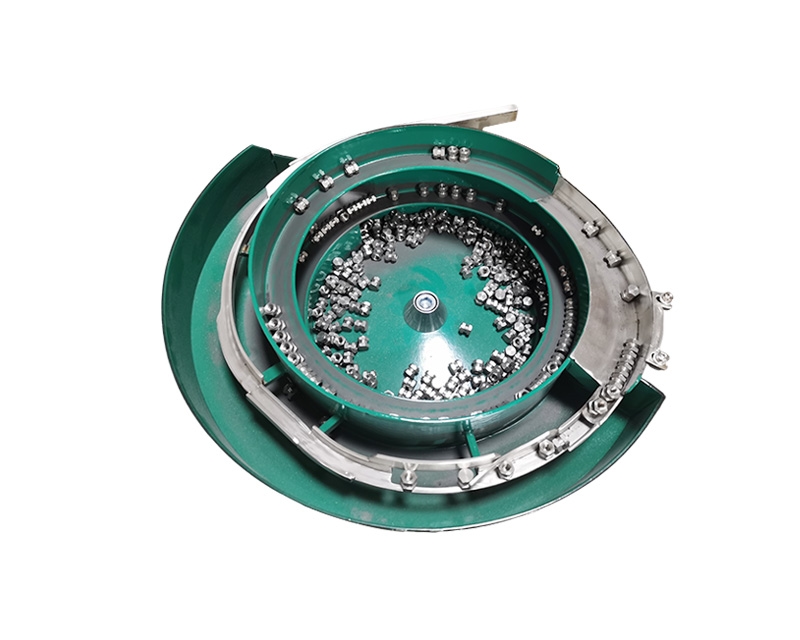
Overview
In the wave of modern manufacturing pursuing efficient and precise production, the application of automated equipment is becoming increasingly critical. As an important component in the assembly process of many products, embedded nuts have conveying efficiency and accuracy that directly affect production progress and product quality. As the core device for automated and orderly conveying of embedded nuts, the embedded nut vibratory bowl feeder holds an important position in manufacturing due to its unique design and functionality. This article will provide an in-depth analysis of the working principle, structural composition, application scenarios, advantages, and common faults and maintenance methods of embedded nut vibratory bowl feeder, helping readers gain a comprehensive understanding of this advanced automated feeding equipment.
Most embedded nut vibratory bowl feeder use electromagnetic vibration methods. Its core component is a pulse electromagnet installed beneath the hopper. When powered on, the electromagnet generates a magnetic field that changes periodically. Under the influence of magnetic field forces, the hopper generates vertical vibrations. At the same time, due to the presence of inclined spring plates, the hopper not only vibrates vertically but also performs torsional oscillation around its vertical axis. This composite vibration mode causes the embedded nuts placed inside the hopper to be subjected to vibration forces. Under the combined influence of vibration and gravity, the embedded nut begins to ascend along a spiral track. During the lifting process, embedded nuts undergo a series of carefully designed track structures, such as screening grooves and directional baffles. These structures screen and adjust the nut's posture to ensure it can automatically enter subsequent assembly or processing positions in a unified state. For example, by adjusting the magnitude and frequency of the electromagnet's current, the hopper's vibration amplitude and frequency can be changed, thus adapting to the conveying needs of embedded nuts of different sizes and shapes.
Some high-precision, miniaturized embedded nut vibratory bowl feeder use the principle of piezoelectric vibration. It utilizes the inverse piezoelectric effect of piezoelectric ceramics. When an alternating electric field is applied to the piezoelectric plate, the plate undergoes corresponding stretching and contraction deformation, which then generates vibration. This vibration is transmitted to the chute through a specific transmission structure, driving the embedded nut to move within the chute. Piezoelectric vibratory bowl feeder feature a simple structure, fast response speed, and high control accuracy. It does not require complex mechanical transmission components, reducing the likelihood of mechanical wear and failure. By changing parameters such as the amplitude, frequency, and pulse width of the drive signal, the intensity and frequency of vibration can be precisely controlled, enabling precise control of the conveying speed and position of the embedded nuts. However, since the driving force of piezoelectric vibratory bowl feeder is relatively small, they are mainly suitable for conveying small and lightweight embedded nuts.
The hopper is a storage container for embedded nuts, and its design directly affects the storage capacity and conveying efficiency of the nuts. Common hopper shapes include cylindrical and conical shapes. The cylindrical hopper has a large volume, suitable for storing large batches of nuts; The tapered hopper helps the nut move more smoothly toward the outlet during vibration. Hoppers are generally made of stainless steel or aluminum alloy, which are corrosion-resistant and wear-resistant, ensuring they are not easily damaged during long-term use. Additionally, the hopper is usually designed with some flow guide structures or protrusions to guide the nut to move along a specific path during vibration, preventing nut accumulation or clogging.
The chassis is the fundamental component supporting the entire vibratory bowl feeder and also plays an important role in transmitting and adjusting vibrations. Common chassis types include front-tie chassis, side-tie chassis, and piezoelectric chassis. The forward-tensioned chassis transmits vibration through vertical tension, providing stable vibration effects; Side-tie chassis apply pulling force from the side, which is advantageous in some space-constrained installation environments; The piezoelectric chassis matches the principle of piezoelectric vibration, efficiently transmitting the vibrations generated by piezoelectric ceramics. The chassis material is generally selected from high-strength cast iron or steel to ensure sufficient rigidity and stability, capable of withstanding various forces generated by the vibratory bowl feeder during operation.
Features
- Part-specific orientation tooling
- Adjustable vibration and flow control
- Line-integration-ready interface
Benefits
- Reduces repetitive manual handling
- Presents parts consistently to the next process
- Supports integration with automated equipment
PARTS
Supported parts
- Metal or plastic parts validated through sample testing
- Components requiring repeatable orientation
- Small and medium parts suitable for vibratory feeding
Want to evaluate this solution with your part?
Send photos, dimensions, orientation and rate. We will respond with the next technical questions.
Request a quote