NEXOFEED / products
Integrated Vibratory Feeding System
The vibratory bowl feeder feeding combination is a complete automated feeding system formed by integrating multiple types of feeding units. Centered on a standard vibratory bowl feeder, it integrates a linear vibratory feeder, sorting mechanism, positioning tooling, detection sen…
Evaluate with my part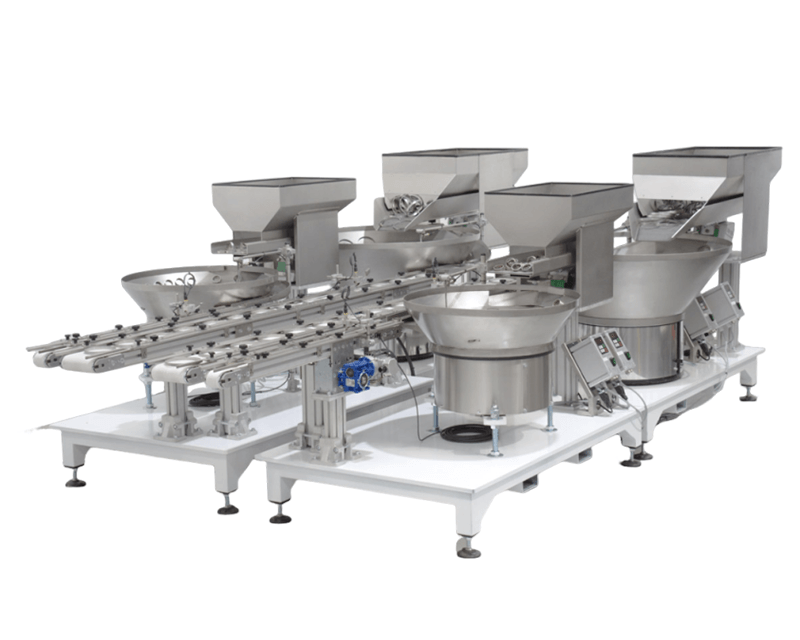
Overview
The vibratory bowl feeder feeding combination is a complete automated feeding system formed by integrating multiple types of feeding units. Centered on a standard vibratory bowl feeder, it integrates a linear vibratory feeder, sorting mechanism, positioning tooling, detection sensing, and electronic control system into one. It can complete the entire process of automatic sorting, directional conveying, uniform feeding, and precise distribution of small components. It meets the continuous feeding needs of complex workpieces and multi-specification parts, and is a commonly used integrated feeding device in automated assembly, inspection, and packaging production lines.
From the perspective of structure and working principle, the vibratory bowl feeder feeding assembly adopts a modular integrated design, with each unit clearly divided and operating in coordination. The core components include a circular vibratory bowl feeder, linear feeder, material channel diversion assembly, photoelectric induction module, variable frequency controller, and complete machine frame. The basic working principle relies on electromagnetic vibration effects. The vibratory bowl feeder generates high-frequency micro-vibrations through the electromagnetic coil and spring plate, causing scattered parts to climb in an orderly manner along the spiral track, completing posture correction and orientation sorting under the action of the track selection structure; The sorted workpieces smoothly enter the linear feeder, and through the linear vibration uniform conveying function, the workpieces are smoothly conveyed to the designated station. The entire integrated system can autonomously adjust vibration frequency, feeding speed, and discharge intervals, and combined with a separate and blocking structure, enables single-piece and spaced feeding, avoiding workpiece stacking congestion; Photoelectric sensing monitors the status of material in the channel in real time, enabling automatic replenishment of material shortages and automatic pause of full materials. Each module is linked to match the production rhythm of back-end equipment. Compared to a single vibratory bowl feeder, feeding is smoother, discharge more controllable, and adaptable to more complex working conditions.
In practical applications, the vibratory bowl feeder feeding combination is widely used in precision component feeding scenarios across multiple industries due to its modular integration, strong adaptability, and stable feeding advantages. In the hardware fastener industry, it can be adapted for standard parts such as screws, nuts, rivets, and small stamped parts for full line feeding, and can be used with automatic assembly machines and fastening equipment to achieve continuous feeding. In the field of electronic components, for precision and easily worn parts such as terminals, small plastic parts, micro pins, and insulating accessories, the modular feeding structure can reduce the probability of workpiece collisions and ensure parts are transported intact and orderly; The auto parts industry is suitable for small shaft sleeves, rubber seals, plastic clips, and other special-shaped workpieces. It relies on multi-stage channel separation to achieve classified and directional feeding, connecting to automated inspection and assembly stations; In the daily chemical food packaging industry, bottle caps, pump heads, and small packaging accessories can be fed in order, matching high-speed packaging assembly line operations. At the same time, the vibratory bowl feeder feeding combination supports customized needs, allowing for multi-tray combinations, separate discharge channels, and dustproof sealed housings. It can also be paired with visual sorting and counting devices to meet the needs of multi-variety, high-precision, and high-cycle automated production.
In daily operation and maintenance, standardized use and regular maintenance ensure long-term stable operation of the vibratory bowl feeder feeding assembly, reduce material jamming failures, and extend the service life of the entire equipment. Before starting the machine daily, check the inside of the vibratory bowl feeder and the straight material channel for any debris or debris, and clean any foreign objects on the track to prevent workpiece jamming; Check whether the entire machine is positioned horizontally, whether each sensor probe is obstructed, and during no-load trial runs, observe whether vibration, feeding, and splitting actions proceed smoothly, with no abnormal noises or shaking before use. During production, reasonably control the feed amount to avoid large amounts of workpieces piled up at once, preventing excessive board load from affecting sorting results; Hard objects must not hit the pallet surface or the chute to prevent track deformation that could reduce alignment accuracy. Daily maintenance requires regular cleaning of oil stains and dust on the pallet and feed channel surfaces to keep the conveying channels smooth and unobstructed; Regularly check the solenoid coils, spring plates, and linear vibration assemblies for cracks, aging, or looseness; tighten all connection bolts; and promptly protect transmission and sliding parts for dust protection. Monthly maintenance requires calibrating vibration parameters and feeding speed matching, checking whether the electrical control wiring and controller interfaces are secure, and troubleshooting potential issues such as wiring aging and poor contact; Repair and replace worn baffles and diverter parts, and adjust the channel levelness and discharge spacing. During long-term shutdowns, cut off the power supply, ensure the entire machine is dust-proof, and store it in a dry, ventilated, dust-low workshop environment to reduce moisture and dust erosion of electrical and vibration components.
The vibratory bowl feeder feeding combination breaks the functional limitations of a single feeding device by adopting a modular combination design, with a reasonable structural layout, convenient debugging, flexible production changeover, and outstanding feeding stability and controllability. It can solve problems such as fluctuating feed speeds in a single vibratory bowl feeder, workpiece congestion, and inconvenient workstation connections, while also adapting to precise sorting and uniform feeding needs in complex working conditions, effectively reducing manual sorting and replenishment steps, and improving the automation and efficiency of the entire production line. The entire system is easy to operate and maintain, with a low failure rate. The installation method can be flexibly adjusted according to the layout of on-site workstations, adapting to various new and renovated automated production lines. As industrial manufacturing moves toward precision, integration, and automation, the vibratory bowl feeder feeding combination has become the mainstream integrated solution for automated feeding of various small and medium-sized components, thanks to its mature supporting structure, stable feeding performance, and broad industry adaptability, providing reliable feeding support for stable production line operation across industries.
Features
- Part-specific orientation tooling
- Adjustable vibration and flow control
- Line-integration-ready interface
Benefits
- Reduces repetitive manual handling
- Presents parts consistently to the next process
- Supports integration with automated equipment
PARTS
Supported parts
- Metal or plastic parts validated through sample testing
- Components requiring repeatable orientation
- Small and medium parts suitable for vibratory feeding
Want to evaluate this solution with your part?
Send photos, dimensions, orientation and rate. We will respond with the next technical questions.
Request a quote