NEXOFEED / products
Medical Component Vibratory Bowl Feeder
In the field of medical product manufacturing, from disposable consumables like syringes and infusion sets to high-end medical devices such as heart stents and orthopedic implants, the quality of every product directly affects patients' lives, health, and treatment outcomes. As t…
Evaluate with my part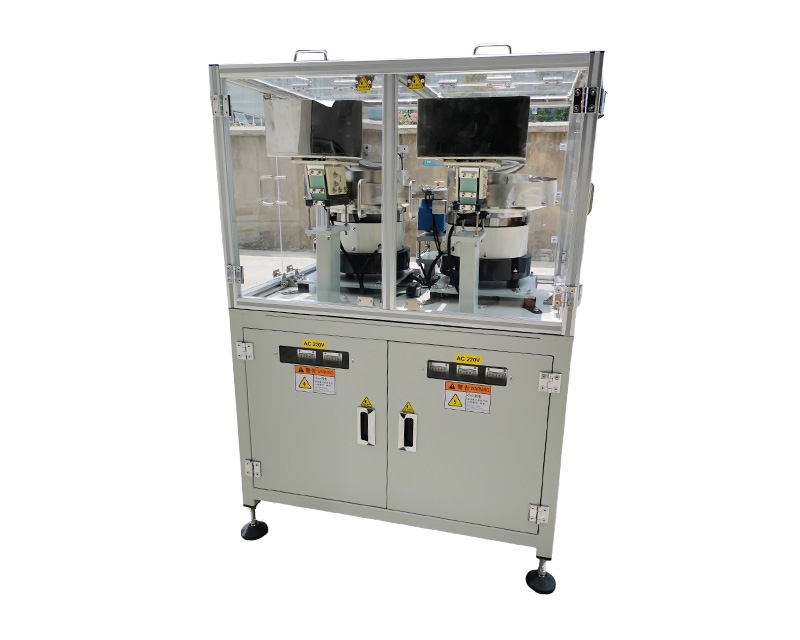
Overview
In the field of medical product manufacturing, from disposable consumables like syringes and infusion sets to high-end medical devices such as heart stents and orthopedic implants, the quality of every product directly affects patients' lives, health, and treatment outcomes. As the core equipment in the medical precision manufacturing process, medical vibratory bowl feeder play an irreplaceable role in automated production of medical products due to their high precision, high cleanliness, and intelligent features. It acts like an invisible guardian, ensuring that every medical component enters the production process precisely and orderly, laying the foundation for the birth of high-quality medical products.
The working principle of medical vibratory bowl feeder is similar to that of ordinary vibratory bowl feeder, both based on vibration to achieve automatic sorting and conveying of materials, but their design and manufacturing place greater emphasis on meeting the special requirements of the medical industry. It mainly consists of the hopper, chassis, vibration motor, spiral track, sorting mechanism, and control system. A hopper is a container for storing medical components, usually made of medical-grade 304 stainless steel or food-grade engineering plastic. The surface is finely polished to achieve a mirror-like finish, making it easy to clean and disinfect, and preventing scratches or damage from sharp medical parts during storage. As the support structure for equipment, the chassis not only ensures stability but also undergoes special anti-corrosion treatment to prevent rust or damage caused by chemical agents and disinfectants in medical environments. The vibration motor serves as the power source, generating high-frequency vibrations that transmit vibrations to the hopper, causing vertical vibrations and torsional oscillations around the vertical axis. This vibration mode can propel the medical components inside the hopper upward along a spiral track. The design of spiral rails is especially critical. Their surfaces undergo special anti-slip and wear-resistant treatments, and sorting mechanisms on the tracks screen and orient parts based on the shape, size, weight, and other characteristics of medical components. For example, when feeding syringe needles, the sorting grooves on the track can precisely lock specific areas of the needle, allowing it to advance with the needle tip facing up; For the infusion set hoses, the vibratory bowl feeder uses gentle vibration methods and special delivery tracks to prevent twisting or deformation of the hose. The control system is responsible for adjusting parameters such as vibration frequency and amplitude of the vibration motor. Through sensors, it monitors the material conveying status in real time. When abnormal conditions such as blockages or material shortages occur, it can promptly adjust equipment operating parameters or issue alarms to ensure stable operation. Compared to ordinary vibratory bowl feeder, medical vibratory bowl feeder emphasize sealing and cleanliness in their structure. The equipment adopts a fully enclosed design, with seamless welding at the joints and equipped with efficient dustproof and antibacterial filtration devices to prevent external pollutants from entering. At the same time, the number of components in the medical vibratory bowl feeder should be minimized to reduce hygiene dead spots, facilitating daily cleaning and disinfection to meet the strict production environment requirements of the medical industry.
Disposable medical consumables such as syringes, infusion sets, and blood collection needles are characterized by large production volumes and high precision requirements. Medical vibratory bowl feeder play an important role in their production. On syringe production lines, medical vibratory bowl feeder are used to deliver various syringe components, including syringes, pistons, needles, and caps. The syringe and piston require precise coordination. The vibratory bowl feeder ensures that each syringe and piston enters the assembly station in the correct direction and posture through precise arrangement and conveyance, guaranteeing their sealing performance. For needles, the vibratory bowl feeder can separate and orient them one by one, keeping the needle tips facing upward, preventing damage or collision between needles during feeding. In infusion set production, the vibratory bowl feeder is responsible for orderly arranging and delivering components such as the infusion tube, dropper hopper, and regulator, ensuring that each part is accurately assembled and guaranteeing the normal functioning of the infusion set. After a well-known medical consumables manufacturer introduced medical vibratory tables, the daily output of syringes increased by 30%, and the product defect rate dropped from the original 3% to 0.5%, greatly improving production efficiency and product quality, meeting the large market demand for disposable medical consumables.
Implantable medical devices such as heart stents and orthopedic implants require extremely high precision and safety; even minor defects can cause serious consequences for patients. Medical vibratory bowl feeder provide reliable assurance for precise processing and assembly of components during the manufacturing process of implantable medical devices. In cardiac stent production, medical vibratory bowl feeder are used to transport raw materials for stents and semi-finished products during processing. Due to the complex structure and tiny size of cardiac stents, the delivery precision of the wire material must reach the micron level. Through precise vibration control and track design, the vibratory bowl feeder can deliver the wire material stably and accurately to the processing equipment, ensuring the forming accuracy of the bracket. In the manufacturing of orthopedic implants, such as artificial joints and bone screws, vibratory bowl feeder can classify and arrange components of different shapes and sizes, ensuring they enter subsequent processes in a state that meets assembly requirements, ensuring the overall quality and performance of the implants.
In addition to medical consumables and implantable medical devices, the assembly of components for medical equipment such as monitors, ventilators, and CT scanners also depends on medical vibratory bowl feeder. These devices contain a large number of electronic components, mechanical parts, and sensors, requiring precise assembly in a clean environment. Medical vibratory bowl feeder can precisely arrange and transport various tiny electronic components, such as resistors, capacitors, chips, etc., preventing static damage or loss of parts during manual feeding. For mechanical parts such as screws, nuts, and shaft components, vibratory bowl feeder can be classified according to their size and shape, ensuring each part is accurately installed on the equipment. During sensor assembly, the vibratory bowl feeder can deliver the sensor to the installation station in the correct direction and position, ensuring sensor sensitivity and accuracy, thereby improving the overall performance and reliability of medical equipment.
Features
- Part-specific orientation tooling
- Adjustable vibration and flow control
- Line-integration-ready interface
Benefits
- Reduces repetitive manual handling
- Presents parts consistently to the next process
- Supports integration with automated equipment
PARTS
Supported parts
- Metal or plastic parts validated through sample testing
- Components requiring repeatable orientation
- Small and medium parts suitable for vibratory feeding
Want to evaluate this solution with your part?
Send photos, dimensions, orientation and rate. We will respond with the next technical questions.
Request a quote