NEXOFEED / products
Sheet and Profile Pusher Feeder
The plate feeding machine is an automated feeding device designed for plates, profiles, and regular workpieces in industrial production. Relying on the mechanical plate pushing and reciprocating structure, it achieves layered, orderly, and continuous automatic material feeding. T…
Evaluate with my part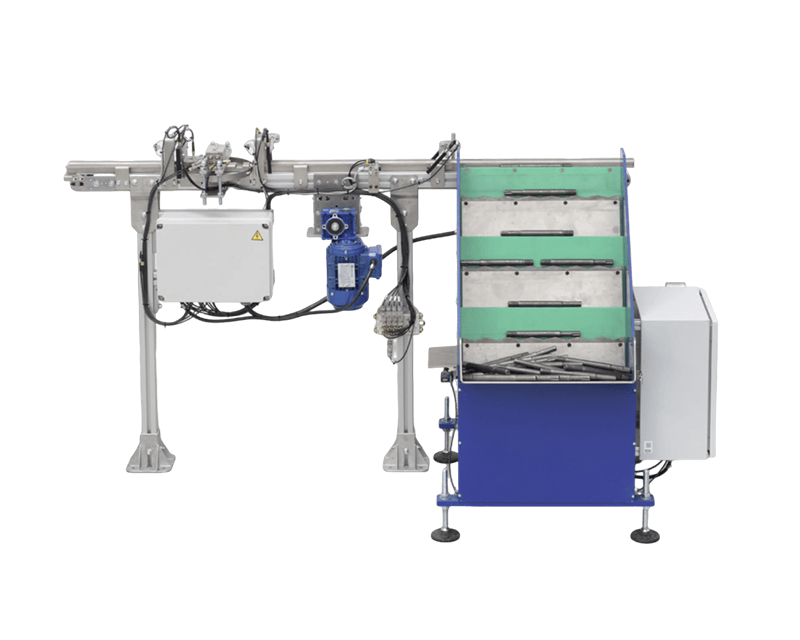
Overview
The plate feeding machine is an automated feeding device designed for plates, profiles, and regular workpieces in industrial production. Relying on the mechanical plate pushing and reciprocating structure, it achieves layered, orderly, and continuous automatic material feeding. The machine operates at a stable rhythm, has balanced pushing force, and is suitable for a wide range of material specifications. It is often paired with cutting machines, bending machines, stamping equipment, and packaging assembly lines. It is a commonly used core device for automated feeding in sheet metal processing, woodworking, hardware manufacturing, and building materials processing.
From the perspective of the equipment's working principle, the step feeder mainly consists of a material storage bin, reciprocating pushing mechanism, servo drive system, positioning blocking assembly, frame body, and electrical control system. The equipment adopts a stacking material storage design for stacking entire stacks, neatly placing stacked sheets or regular workpieces inside the storage bin, relying on the bottom support structure and limit baffles to achieve material positioning and orderly positioning; During operation, the servo motor, together with the transmission mechanism, drives the push plate to perform horizontal reciprocating linear motion. Through a single quantitative push, the push plate smoothly pushes out the lowest or most surface single material and sends it to subsequent processing stations. The entire machine relies on mechanical rigid pushing to replace traditional vibration and centrifugal feeding methods. The pushing stroke, pushing speed, and single discharge interval can all be freely set via the electronic control system, precisely matching the production rhythm of backend equipment. It is also equipped with limit sensors and material shortage detection devices. When material in the silo is insufficient, it automatically replenishes the machine, and if material gets stuck, it can immediately stop for protection. Relying on both mechanical structure and electrical control, it achieves smooth, precise, and safe automated feeding operations.
In practical application scenarios, the pusher feeding machine is suitable for many industries and covers a wide range of material types. The sheet metal processing industry can be used for automatic feeding of cold-rolled sheets, stainless steel plates, aluminum sheets, and other metal sheets, connected to laser cutting machines, CNC punching presses, and shearing machines, enabling automatic material sorting and sheet feeding for entire stacks, eliminating the tedious steps of manual lifting and layered sorting; The woodworking furniture industry adapts to feeding various types of wood panels such as wood boards, MDF, decorative panels, and cabinet panels, combined with cutting machines and edge banding machines on assembly lines to enhance the automation level of furniture production; In the hardware profile processing field, it is suitable for the continuous feeding and feeding of long profiles, regular stamped parts, and block hardware workpieces, meeting the needs of batch continuous processing; The packaging and light industry industries can be used for automatic pushing and feeding of cartons, cardboard, and neatly packed materials, connecting with automatic balers and packing equipment to achieve uninterrupted back-end assembly line operations. The equipment supports customized modifications of storage bins and push plate strokes based on material size, thickness, and weight. It can be installed in various installation modes: floor-standing, embedded, and assembly line docking, adapting to different workshop layouts and working conditions.
In terms of daily operation and maintenance, standardized use and regular maintenance can effectively keep the pusher feeding machine running stably over the long term, reduce the failure rate, and extend the equipment's service life. Before starting the machine daily, check the storage silo for any debris or waste accumulation, clear obstacles within the guide rail and push plate travel range, and avoid material jamming or jamming during feeding; Check whether the base of the equipment body is stable, whether protective devices are intact, and during no-load trial runs, observe whether the pusher plate's reciprocating motion is smooth, if there are any abnormal noises, and whether the start/stop is smooth. Only after confirming no abnormalities can production and feeding begin. During use, materials must be stacked strictly according to the equipment's rated specifications to ensure neat and orderly arrangement, avoid uneven loading or over-high stacking, and prevent deformation or feeding deviations caused by uneven force on the push plate. Daily cleaning requires regularly removing dust and debris from the surfaces of the push plate guide rails and transmission parts, keeping the sliding areas smooth and unobstructed; Regularly check the operating status of key components such as servo motors, drive chains, and lead screw slides, observe for looseness, abnormal noises, or overheating, and apply lubricating grease periodically to ensure the transmission structure operates smoothly and sensitively. Monthly maintenance requires tightening bolts fixing the entire machine frame and push plate, correcting the parallelism of the push plate and the levelness of the pusher, checking whether the sensor switch and control wiring harness are intact, and promptly addressing issues such as wiring aging and poor contact; The annual comprehensive maintenance requires disassembling and inspecting vulnerable parts, replacing worn sliders, seals, and other consumables, removing rust and protecting the frame steel structure, recalibrating the push speed and stroke parameters, and restoring optimal equipment performance. The equipment is suitable for installation in a flat, stable, well-ventilated, and dry workshop environment, reducing dust and moisture erosion on mechanical transmissions and electrical components. Regular inspections and standardized operations can significantly reduce the frequency of downtime and maintenance.
The step feeder features a solid and stable structural design, ample mechanical pushing power, smooth feeding without damaging materials, simple debugging, convenient material replacement, reasonable overall footprint, and multiple modes for assembly line integration with independent standalone machines. It not only replaces manual handling of heavy and large material handling and loading, reducing labor intensity, but also stabilizes feeding rhythm, ensures consistency in subsequent processing steps, and reduces material waste and processing errors. With the industry trend of manufacturing automation upgrades and the popularization of sheet metal processing assembly lines, the push plate feeding machine, with its reliable structure, strong adaptability, and moderate operation and maintenance costs, serves a wide range of fields such as sheet metal, woodworking, hardware, and packaging, providing stable and reliable equipment support for automated feeding of various plate and regular workpieces.
Features
- Step lifting with less continuous vibration
- Part-configured hopper and discharge
- Low- and full-level sensing available
Benefits
- Reduces repetitive manual handling
- Presents parts consistently to the next process
- Supports integration with automated equipment
PARTS
Supported parts
- Long, heavy or regularly shaped parts
- Shafts, bolts and cylindrical components
- Parts sensitive to noise or continuous vibration
Want to evaluate this solution with your part?
Send photos, dimensions, orientation and rate. We will respond with the next technical questions.
Request a quote