GUÍA TÉCNICA
When a connector assembly station stops receiving parts, it is tempting to describe every event as a feeder problem. Yet an empty pickup position can arise because parts are not arriving, because the receiving station has not requested another part, or because a transfer has not completed. Those situations require different investigations.
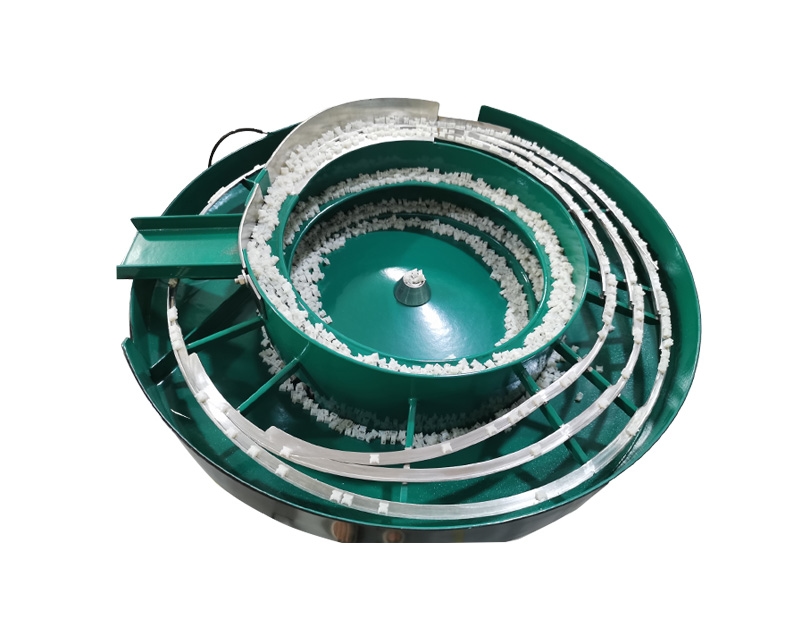
For a NexoFeed YH-753 connector feeding application, start with the first observable interruption and the actual queue condition. This guide provides a diagnostic framework, not controller settings or a substitute for the delivered operating instructions. Only authorized personnel should perform interventions under the site's required safe isolation procedure.
View the application workflow diagram (conceptual illustration)
Define the two conditions clearly
Starvation means that the receiving operation is ready for the next connector but the required part is unavailable. Blocking means that movement is prevented because the next location cannot accept a part. A blocked downstream position can eventually stop upstream movement even though the bowl still contains plenty of components.
These are descriptions of the process state, not automatic root causes. A queue may empty after a missed transfer, while another may fill because a station is intentionally paused. Record what the equipment was supposed to do before deciding that either behavior is abnormal.
Watch one complete handoff
From an approved observation position, follow a connector through the final transfer. Identify the ready indication, the release request, the movement and the receiving confirmation as defined by the machine documentation. Do not infer the whole sequence from a single light on an operator screen.
If an event cannot be observed safely, request engineering support or approved recorded evidence. Avoid asking an operator to reach past a guard or defeat a protective function to make the problem easier to see. The investigation must preserve the normal safeguards and operating responsibilities.
Find the first empty position
When the receiver is genuinely waiting, determine where the supply first becomes absent. There may be parts in the bowl but none at the discharge, parts along the discharge but none at the separator, or a connector at the separator that never reaches the nest.
Describe that location precisely in the event record. “Bowl full, discharge queue empty” directs a different investigation from “connector waiting at release position, receiver request absent.” Useful descriptions narrow the boundary without assuming that a particular sensor or tooling element has failed.
Find the first persistent queue
If connectors accumulate, identify where the queue stops advancing and what lies immediately downstream. Compare the condition with the normal controlled waiting state. A full queue may be an intended response to a paused assembly station rather than evidence that vibration is too low.
Look for a mismatch between the visible state and the recorded state. For example, a nest may appear occupied while the interface indicates ready. Such a discrepancy requires review of the documented sequence and detection arrangement. Do not bypass a confirmation simply to make the queue move again.
Do not treat every pause as a speed problem
Increasing a feeder setting can obscure a downstream restriction without solving it. It may change how many connectors wait or how they contact one another. If the interruption originates at the final release or receiver, a change upstream may have no useful effect.
Preserve the approved baseline while collecting evidence. If an authorized adjustment is proposed, record its purpose and expected result before making it. Change one agreed variable at a time so a successful run can be connected to a specific correction rather than several undocumented interventions.
Compare continuous running with intermittent demand
A system may appear satisfactory during continuous pickup yet interrupt when the receiver pauses between cycles. Review what happens to connectors while waiting and how the first transfer occurs after a pause. The important observation is the state transition, not only the average number of parts delivered.
Also compare events immediately after replenishment with events later in the run. Label observations by condition so they are not mixed together. This helps the engineering team distinguish a supply issue associated with incoming components from a transfer issue associated with station timing.
Inspect connector condition through the route
Observe approved samples before feeding and at the receiving point. Compare protected features against the agreed inspection standard. A change that restores movement but marks a latch or disturbs an installed component is not an acceptable correction merely because the station resumes cycling.
Use the specified quality process for suspect material. Do not repeatedly return rejected connectors to the bowl to see whether they eventually pass. Keep the affected lot and the relevant event identifiable until the responsible personnel decide whether further examination or containment is necessary.
Build an event record that separates responsibilities
For each representative interruption, record:
- The connector part number, revision and lot.
- Whether the receiving station was ready or intentionally paused.
- The first empty or blocked location.
- Relevant interface indications and alarms.
- Whether the event followed replenishment, restart or changeover.
- Component condition before and after the transfer.
- The authorized action and its observed result.
Use neutral language. A timestamped statement that a connector remained in the nest after a pickup request is more useful than an unsupported conclusion that the feeder is unreliable. The record should allow mechanical, controls and receiving-machine teams to examine the same event.
Verify recovery under the original condition
After an approved correction, reproduce the operating condition that exposed the interruption. If the fault followed a downstream pause, verification should include that pause. A long uninterrupted run does not necessarily challenge the transition that previously failed.
Check that the correction has not created a new problem elsewhere. Confirm both part availability and acceptable connector condition. Preserve the final setup record, responsibility boundary and verification evidence so later shifts can recognize the intended behavior without repeating the original investigation.
Practical questions
Is a full discharge queue always a fault?
No. It may be the designed response to a receiver that is not ready. Compare it with the documented operating state and restart behavior.
Should an operator force the next connector forward?
No. Follow the approved recovery procedure. Manual forcing can damage a component and hide the state that needs investigation.
When should I ask for an application review?
Escalate repeated interruptions whose first cause remains uncertain, or changes in component geometry and receiving equipment. Send NexoFeed the event record, referencing YH-753, so the investigation begins with the complete transfer rather than an isolated speed setting.