GUÍA TÉCNICA
A plug that travels correctly through a bowl can still arrive incorrectly at the assembly tool. The final transfer may allow rotation, the receiving nest may contain a previous part, or the machine may request another plug before the last pickup is confirmed. A useful setup checklist follows the complete handoff rather than stopping at the feeder outlet.
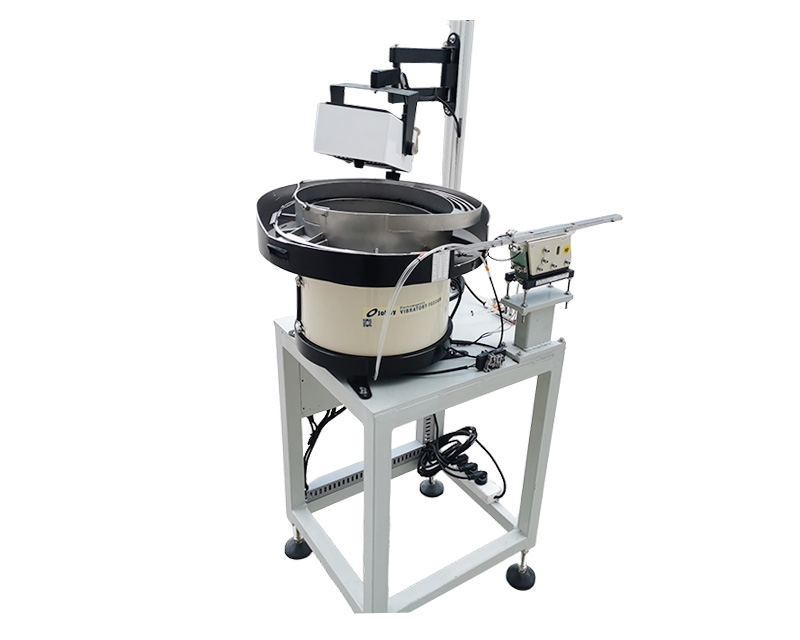
This guide is intended for developing checks around a YH-764 electronic plug feeding application. Actual operation must follow the delivered instructions and the cell's approved procedures. Inspection that requires access to moving mechanisms must be performed under the required safe isolation conditions, not while the equipment is running.
View the application workflow diagram (conceptual illustration)
Confirm the job before loading
Check the plug part number, drawing revision and assembly state against the setup record. Confirm whether the job uses a bare molded body or a component with contacts or other installed features. The same outer shape does not prove that two parts have the same handling requirements.
Identify the incoming lot and keep the container traceable during replenishment. If an unexpected variant is found, follow the site's containment procedure. Do not rely on the feeder to separate a mixed container unless that exact task is part of the validated system design.
Match the installed setup to the plug
Verify the identification of approved change parts, the receiving nest and the selected operating recipe. A correct recipe with the wrong mechanical tooling is still an incorrect setup. Include any downstream gripper or fixture that determines the final position.
Use controlled references for setup checks. Avoid adjusting a guide until a plug “looks right” without knowing the approved support surfaces and required clearances. If the component has changed, engineering should review the change rather than asking an operator to compensate through informal adjustments.
Inspect the final transfer under isolation
Check the locations specified in the machine instructions for retained parts, debris, wear or visible movement. Pay particular attention to the transition between the feeder and the receiving arrangement. A plug may be supported differently at that boundary than it is on the upstream track.
Inspect protected features on retained or rejected parts where permitted. A repeated mark can help identify an unintended contact location. Do not alter contact surfaces or polish away a wear pattern before it has been reviewed; that evidence may explain why a previously accepted handoff has changed.
Verify the accepted pose at the pickup point
Compare the first presented plug with the approved image or drawing. Check the mating-face direction and any rotational requirement separately. A plug can face forward while still being rotated into an unacceptable position.
Observe whether the component remains stable while waiting for pickup. The required condition is the one the receiving tool actually encounters, not a momentary position during motion. If the plug settles differently after a pause, record that behavior and escalate it rather than shortening a timer to hide the change.
Check the distinction between request and confirmation
Review the delivered sequence with the controls team. A machine-ready signal, a part-present indication and a successful pickup confirmation represent different conditions. The feeder should respond to the defined sequence, not merely continue supplying plugs whenever an upstream sensor sees space.
If the receiving position remains occupied, establish why before releasing another part. A failed pickup, incomplete release or detection problem requires the specified recovery action. Do not assume that a delayed signal can be corrected by increasing feeder speed or suppressing the alarm.
Test the planned downstream pause
A normal production pause should leave the feed path in an understood state. Confirm that the accepted stop-start sequence prevents unwanted accumulation at the receiving point. The test should use the procedure agreed by the integrator and should not involve bypassing machine interlocks.
Observe the first plugs after the pause. Look for a changed face direction, unexpected double presentation or component contact not seen during continuous operation. If the issue occurs only after waiting, capture that condition in the fault report rather than describing the system as generally slow.
Inspect component condition after the handoff
Compare incoming plugs with those that have completed the feed path. Use the quality criteria for the actual component, including any protected contacts, latches or cosmetic regions. Feeding performance and component condition must be reviewed together.
Do not interpret successful assembly as proof that no damage occurred. Some defects may not prevent immediate insertion but may still violate the component requirements. Where electrical or retention verification is needed, it must remain a defined inspection process rather than an assumption based on visible travel.
Recover to a known state
After an interruption, use the approved sequence to establish the condition of the queue, release mechanism and receiving nest. If a plug's identity or previous handling is uncertain, follow the containment procedure. Do not return unknown pieces to the supply container without an approved disposition.
A restart should confirm the expected setup and the first-off presentation. Record any adjustment made during the interruption. Otherwise, the next operator may inherit a modified condition that differs from the documented setup while believing the machine remains unchanged.
Keep a concise handoff record
The most useful records connect a symptom to a location and machine state. Include:
- Plug reference, revision, assembly state and lot.
- Installed tooling, nest and recipe identifiers.
- The first point where orientation or presentation changed.
- Whether the event followed refill, pause or restart.
- Observed request, presence and pickup states.
- Component inspection results and authorized corrective action.
Photographs or a short permitted video can help explain a transfer issue, provided they show the receiving point as well as the feeder. Record from a safe position outside guarding and avoid exposing unrelated production information.
Common questions
Should I adjust the bowl when the nest stays full?
First determine why the receiving tool has not cleared the nest. The feeder may already be responding correctly to a downstream condition.
Can a sensor prove that the mating face is correct?
Only if that specific orientation check is designed and validated. A basic part-present indication should not be treated as an orientation result.
When should the setup be reviewed?
Request review after repeated pose changes, visible component damage, a part revision or an unexplained recovery problem. Contact NexoFeed with reference YH-764 and the handoff record so the investigation starts at the right interface.