GUÍA TÉCNICA
A small change in pin condition can be difficult to see while production is running. An interruption may first appear at a release position or receiving nest, even though the relevant difference existed before the pin entered the feeder. Effective troubleshooting therefore begins by preserving evidence rather than immediately changing machine settings.
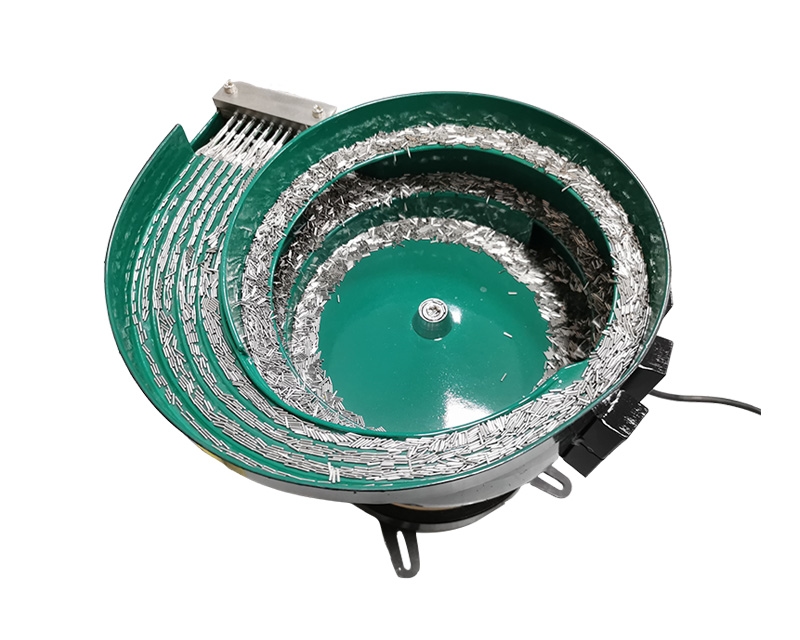
This guide applies to reviewing a YH-745 pin feeding application. It is not a repair procedure or a recommendation to straighten, reshape or rework pins. Use the delivered machine instructions and the site's authorized isolation process before any intervention, and keep component acceptance decisions with the responsible quality personnel.
View the application workflow diagram (conceptual illustration)
Keep an incoming reference sample
When a repeatable problem appears, retain identified samples from the incoming material and from the affected point in the process. Record their part number, revision and lot. If the problem followed a material change, retain examples from the preceding accepted group where the site's procedure permits.
The purpose is comparison, not an informal judgment that a lot is good or bad. Use the specified inspection method to evaluate relevant features. A photograph may help communicate an event, but it does not replace the required measurement or acceptance process.
Describe the first observable failure
Identify what happened before the final interruption. A pin may stop advancing, arrive with the wrong end leading, fail to leave a release position or enter the receiver in an unacceptable attitude. These observations point to different boundaries and should not be merged into one label such as “pin jam.”
Record the first location at which the expected state was lost. If that location cannot be observed safely, request an approved method of investigation. Do not defeat guarding or reach into the running mechanism to obtain a closer view.
Compare condition before and after handling
Ask whether a visible difference was already present in the incoming sample or appears only after a particular transfer. Preserve the identity of the samples and the conditions under which they were collected. Avoid repeatedly circulating the same suspect pin, because additional handling can obscure the original evidence.
Keep the comparison tied to the drawing and quality criteria. A feature that looks unusual may be permitted, while a less obvious difference may be important to the receiving operation. The feeding team should not invent a new component tolerance to explain a difficult run.
Do not force a suspect pin through
Forcing a pin past a restriction can damage the component or tooling and destroy evidence of the original condition. Follow the approved recovery method and retain the affected item when required. A successful manual push is not proof that the normal automatic process is acceptable.
Likewise, do not bend a pin back into shape and return it to production as a troubleshooting shortcut. Any rework requires a separately approved process. Feeding equipment should not become an uncontrolled method of screening or correcting uncertain component quality.
Review support at the transfer boundary
For authorized engineering review, compare the delivered arrangement with its approved configuration. Identify how the pin is supported as it leaves one element and enters the next. Check whether the receiving location and tooling identity correspond to the current job documentation.
Do not prescribe a new clearance from a general guide. The appropriate arrangement depends on the actual part and equipment. If the first observed problem is at a transition, document the condition and refer it to the responsible engineer rather than adjusting several guides until movement resumes.
Distinguish pin availability from receiver readiness
A pin waiting at the discharge may be in the correct state if the receiver is not ready. Compare the visible condition with the intended control sequence. Identify whether the request, release and confirmation correspond to the same physical transfer.
If a pin is available but repeatedly fails to be accepted, investigate the receiving boundary as well as the feeder. Increasing upstream delivery does not resolve an occupied nest or an incomplete transfer. Preserve the event sequence so the responsible teams can agree where the mismatch begins.
Look for condition-dependent patterns
Label events that occur after replenishment, restart or changeover. Compare them with events during otherwise steady running. The pattern can help distinguish an issue associated with incoming material from one associated with the receiving sequence or the restored setup.
Avoid treating the pattern as proof by itself. A refill may coincide with a different lot, a different loading practice or another production change. Record the relevant conditions separately so the investigation does not assign the cause to the most visible event without evidence.
Preserve the approved baseline
Keep a record of the accepted tooling and configuration before authorized changes are made. State what each proposed correction is intended to address. Where a change is approved, verify it against the observation that prompted the investigation, not merely against a short run with different conditions.
Check the resulting component condition as well as movement. A correction that clears interruptions but produces unacceptable marks or deformation has not solved the application problem. The final decision should reflect the complete feeding requirement and the relevant quality criteria.
Use a concise issue record
The most useful information includes:
- Exact pin reference, revision and material lot.
- Incoming and affected sample identities.
- First observed failure location and part attitude.
- Relevant receiving-state indications and alarms.
- Relationship to refill, restart or changeover.
- Approved corrective action and repeated test condition.
- Inspection result and final disposition of suspect material.
Make the record available across shifts. If an unresolved issue reappears, the next team should not have to recreate the original circumstances from memory. Clear evidence also makes remote supplier support more useful because the discussion starts with a defined event.
Frequently asked questions
Does every bent pin originate in the feeder?
No conclusion should be made without comparison. Incoming condition, handling and downstream transfer all need to be considered using identified samples.
Should I increase vibration when pins stop moving?
Do not assume that is the appropriate correction. First establish the process state and use the approved troubleshooting procedure. Setting changes belong within authorized application guidance.
When should the supplier be involved?
Escalate repeatable transfer problems, changed pin geometry or an uncertain relationship between handling and component condition. Send NexoFeed the issue record, referencing YH-745, with the receiving operation described alongside the feeder.