NEXOFEED / products
Automotive Rubber Part Vibratory Bowl Feeder
As the automotive industry moves toward intelligence and automation, automotive rubber parts, as key components ensuring vehicle sealing, shock absorption, and noise reduction, have production quality and efficiency that directly affect vehicle performance and driving experience.…
Evaluate with my part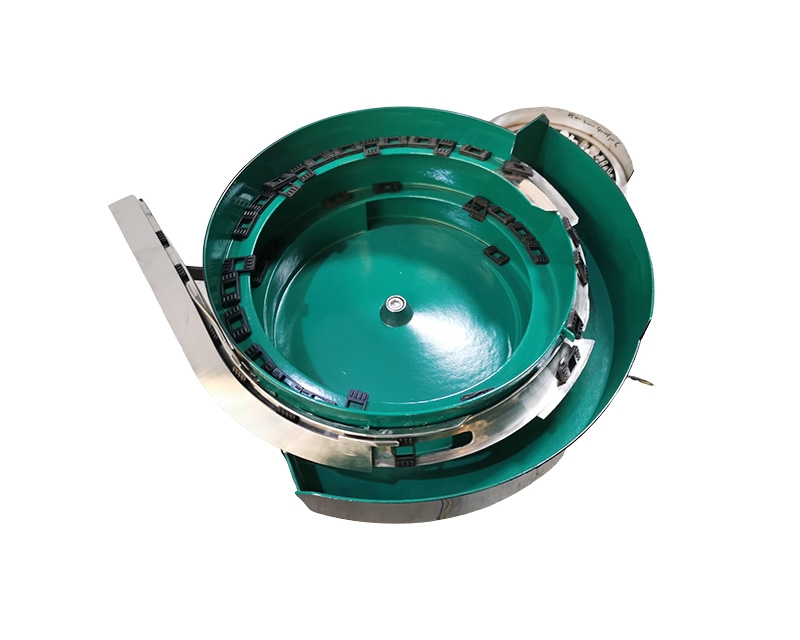
Overview
As the automotive industry moves toward intelligence and automation, automotive rubber parts, as key components ensuring vehicle sealing, shock absorption, and noise reduction, have production quality and efficiency that directly affect vehicle performance and driving experience. As the core equipment for automated feeding, sorting, and conveying of rubber parts, automotive rubber parts vibratory bowl feeder play an indispensable role in the entire automotive manufacturing industry chain due to their unique technical features and functional advantages. This article will delve into the working principles of automotive rubber vibratory bowl feeder and, combined with practical application scenarios, comprehensively demonstrate their significant value in the automotive manufacturing field.
The automotive rubber part vibratory bowl feeder is an automated device that integrates mechanical vibration, electrical control, and precision sorting functions. Its workflow revolves around three core steps: vibration conveying, directional sorting, and precise feeding. After the equipment is started, the vibration motor or piezoelectric ceramic installed at the bottom of the vibratory bowl feeder becomes the power source. The vibrating motor generates centrifugal force through the high-speed rotation of the eccentric block, which in turn causes vibration of the vibratory bowl feeder; Piezoelectric ceramics use the inverse piezoelectric effect to cause mechanical deformation under the influence of an electric field, resulting in vibration. This vibration is transmitted at a specific frequency and amplitude to the hopper of the vibratory bowl feeder, causing the chaotic and disorderly automotive rubber parts inside to begin moving upward along the spiral track. On the spiral track, a specialized sorting structure is designed according to the shape, size, and structural characteristics of automotive rubber parts. There are many types of automotive rubber parts, including sealing rings, rubber pads, shock-absorbing rubber blocks, dust covers, and more. Different types of rubber parts differ in shape, flexibility, hardness, and other aspects. The sorting structure is designed through grooves, bosses, notches, and other means. When rubber parts move on the track, only those that meet specific postures (such as the sealing ring opening direction is the same and the rubber pad facing upward) can successfully pass through the sorting structure. Rubber parts with incorrect posture will fall back into the hopper due to gravity or vibration, re-entering the sorting process. After multiple rounds of screening and adjustment, precise and directional arrangement of automotive rubber parts is achieved. The oriented rubber parts are continuously conveyed along the track to the discharge port. At the discharge outlet, auxiliary mechanisms such as straight vibrators or blowing devices are usually installed. The straight vibrator delivers the rubber parts to the designated position at a stable rhythm through slight vibrations; The blowing device uses compressed air to quickly and accurately blow rubber parts to subsequent assembly and inspection stations, ensuring that rubber parts are supplied to automotive production lines promptly and precisely to meet the demands of automated manufacturing. Throughout the process, the electrical control system precisely controls the conveying speed and feeding rhythm of rubber parts by adjusting the frequency and amplitude of the vibrating motor, as well as the operating parameters of the linear vibrator, ensuring stable and efficient feeding.
In automotive engine systems, rubber components are responsible for important functions such as sealing, shock absorption, and noise reduction. For example, engine oil seals are used to prevent oil leaks and ensure normal engine lubrication and operation; The intake manifold seal ensures the intake system's sealing and improves engine combustion efficiency; The engine suspension damping rubber block reduces vibration and noise generated during engine operation, enhancing driving comfort. The automotive rubber parts vibratory bowl feeder can precisely feed and sort these rubber parts, ensuring that each rubber part enters the production line in the correct posture. During engine assembly, the vibratory bowl feeder accurately delivers rubber parts such as oil seals and sealing rings to the assembly station. Together with automated assembly equipment, it enables fast and precise installation, preventing oil and air leaks caused by improper rubber installation, and improving engine reliability and stability.
Rubber components in automotive chassis systems are crucial for vehicle handling, comfort, and safety. For example, the shock absorber rubber bushings in the suspension system can effectively absorb vibrations caused by road bumps, reducing body shaking; The rubber sleeve of the stabilizer bar helps enhance driving stability and improve steering performance; The shaft dust cover prevents dust, mud, and other debris from entering the shaft, protecting its normal operation. Automotive rubber parts vibratory bowl feeder play a key role in chassis rubber parts production lines. When producing shock absorber rubber bushings, the vibratory bowl feeder can be specially sorted according to the shape and size of the bushing, ensuring that the bushing does not deform or be damaged during conveying and is accurately delivered to vulcanization and assembly stations. In chassis assembly, the vibratory bowl feeder precisely supplies various rubber sleeves, dust covers, and other components to ensure the assembly accuracy of chassis components and enhance the overall performance of the vehicle.
Rubber parts in automotive body systems are mainly used for sealing and sound insulation. Door seals effectively prevent rainwater and dust from entering the car, while reducing wind noise during driving; Window sealing strips ensure the window sealing and improve interior comfort; The trunk sealing strip ensures the trunk's waterproof and dustproof performance. Automotive rubber parts vibratory bowl feeder are indispensable in the production and assembly of body rubber parts. During the production of sealing strips, the vibratory bowl feeder can arrange and transport sealing strips of different lengths and shapes in an orderly manner, facilitating subsequent cutting and welding processes. During body assembly, the vibratory bowl feeder accurately delivers the sealing strips to the installation positions such as the doors, windows, and trunk. Combined with automated assembly equipment, this enables rapid installation, improves the body's sealing performance and assembly efficiency, and provides consumers with a quiet and comfortable driving environment.
Features
- Part-specific orientation tooling
- Adjustable vibration and flow control
- Line-integration-ready interface
Benefits
- Reduces repetitive manual handling
- Presents parts consistently to the next process
- Supports integration with automated equipment
PARTS
Supported parts
- Metal or plastic parts validated through sample testing
- Components requiring repeatable orientation
- Small and medium parts suitable for vibratory feeding
Want to evaluate this solution with your part?
Send photos, dimensions, orientation and rate. We will respond with the next technical questions.
Request a quote