NEXOFEED / products
Automotive Shock Absorber Component Feeder
In today's booming automotive industry, consumers have higher demands for comfort, safety, and durability in vehicles. As the core component ensuring smooth vehicle driving, the performance of the shock absorption system is crucial, and the production accuracy of shock absorber c…
Evaluate with my part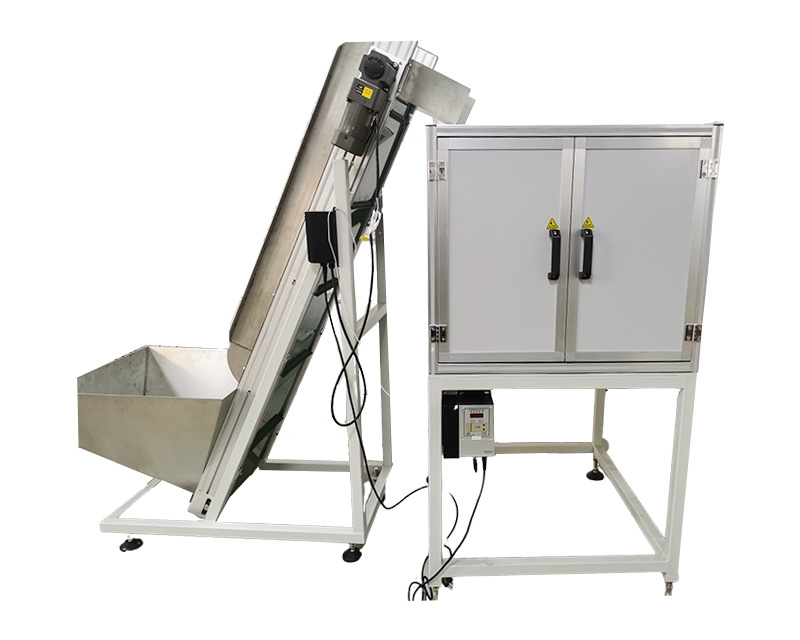
Overview
In today's booming automotive industry, consumers have higher demands for comfort, safety, and durability in vehicles. As the core component ensuring smooth vehicle driving, the performance of the shock absorption system is crucial, and the production accuracy of shock absorber components is a key factor determining the quality of the shock absorber system. As the "invisible craftsmen" on automotive parts production lines, the vibratory bowl feeder for automotive shock absorbers has become core equipment for improving the quality and efficiency of automotive shock absorber parts production with precise part arrangement and efficient conveying capabilities, playing an irreplaceable role in the automotive manufacturing field.
Automotive shock absorber parts vibratory bowl feeder are automated devices designed based on mechanical vibration principles. Their core function is to automatically sort, orient, and transport shock absorber parts of various shapes and sizes, such as springs, pistons, guide seats, seals, etc., to designated workstations, providing an orderly supply of parts for subsequent assembly and processing. This equipment mainly consists of the hopper, chassis, vibration motor, spiral track, sorting mechanism, discharge port, and control system. The hopper is used to store shock-absorbing components to be processed, with capacity designed according to production needs to ensure parts supply for a certain period. As the support structure of the equipment, the chassis not only bears the weight of the hopper and parts but also provides a stable installation foundation for the vibration motor. The vibrating motor is the power source of the vibratory bowl feeder. It generates high-frequency vibrations that are transmitted to the hopper, causing vertical vibration and torsional oscillation around the vertical axis. Inside the hopper, the shock-absorbing components move upward along the spiral track under the influence of vibration. The surface of the spiral track is specially treated to provide appropriate friction, which can both propel parts forward and prevent them from slipping or jamming during movement. Various sorting mechanisms of various shapes and functions are installed on the tracks, which screen and orient parts based on the shape, size, weight, and other characteristics of the shock-absorbing components. For example, for coil springs, the spiral sorting grooves on the track can lock specific parts of the spring, allowing it to continue moving forward in the specified direction and posture; For parts requiring directionality, such as pistons, the sorting mechanism passes through protrusions or grooves to force the piston to pass in the correct direction. When parts rise along the spiral track to the top, they are output from the discharge port in an orderly and oriented manner, directly entering subsequent assembly or processing steps. The control system is responsible for adjusting parameters such as vibration frequency and amplitude of the vibration motor to accommodate different types and specifications of shock-absorbing components. Sensors monitor the conveying status of parts in real time. When abnormal situations such as part blockages or material shortages occur, the control system can promptly adjust equipment operating parameters or issue alerts to ensure stable equipment operation.
Springs are the key elastic components of automotive shock absorption systems, and their quality directly affects the damping effect. In the spring production process, vibratory bowl feeder for automotive shock absorber parts are used to sort and convey the rolled springs. Because springs are slender and easy to wrap, traditional manual feeding is not only inefficient but also prone to spring deformation and damage. Through specially designed tracks and sorting mechanisms, the vibratory bowl feeder can separate the intertwined springs one by one and transport them in specific directions and postures to the inspection or assembly station. In the spring strength testing stage, the spring conveyed by the vibratory bowl feeder can enter the testing equipment directly without manual secondary adjustment, improving testing efficiency and accuracy. During the assembly of springs and shock absorbers, the vibratory bowl feeder accurately delivers the spring to the assembly position, allowing for quick and precise assembly with other components, greatly improving assembly efficiency and quality.
The core components of a shock absorber include the piston, piston rod, guide seat, sealing components, etc., and the assembly precision of these parts is extremely high. Automotive shock absorber parts play an important role in the assembly of core components of shock absorbers. For pistons and piston rods, the vibratory bowl feeder uses precise sorting and orientation to ensure they enter the assembly station in the correct direction, guaranteeing that the clearance between the piston and cylinder barrel meets design requirements. Small parts such as guide seats and seals are small in size and irregular in shape, making manual feeding prone to missed or incorrect installations. The vibratory bowl feeder can accurately arrange and transport these parts, avoiding assembly errors and improving product pass rates. On the production line of a well-known automotive shock absorber manufacturer, after introducing advanced vibration absorber parts with vibratory bowl feeder, the assembly efficiency of core shock absorber components increased by 40%, and the product defect rate dropped from the original 5% to 1.5%, significantly enhancing the company's production efficiency and product competitiveness.
The production of modern automotive shock absorption system components usually uses automated production lines. The vibratory bowl feeder for automotive shock absorption parts, as front-end equipment on the production line, needs to be seamlessly integrated with subsequent processing, assembly, and inspection equipment. The discharge port of the vibratory bowl feeder is connected to the feed port of subsequent equipment via conveyor belts, robotic arms, and other transmission devices, enabling automatic part transfer. During transmission, the vibratory bowl feeder and subsequent equipment exchange information through sensors and control systems. For example, if subsequent processing equipment malfunctions or the processing speed slows down, the sensor sends a signal to the vibratory bowl feeder, which automatically reduces the conveying speed or pauses operation to prevent part accumulation; Once the equipment returns to normal, the vibratory bowl feeder can automatically resume normal conveying to ensure smooth operation of the production line. This automated connection not only improves production efficiency but also reduces manual intervention, lowers quality issues caused by human factors, and makes the entire production process more stable and reliable.
Features
- Part-specific orientation tooling
- Adjustable vibration and flow control
- Line-integration-ready interface
Benefits
- Reduces repetitive manual handling
- Presents parts consistently to the next process
- Supports integration with automated equipment
PARTS
Supported parts
- Metal or plastic parts validated through sample testing
- Components requiring repeatable orientation
- Small and medium parts suitable for vibratory feeding
Want to evaluate this solution with your part?
Send photos, dimensions, orientation and rate. We will respond with the next technical questions.
Request a quote