NEXOFEED / products
Seat Belt Buckle Vibratory Bowl Feeder
In the current booming automotive industry, automotive safety performance has become one of the core concerns for consumers. As a key component of a vehicle's passive safety system, seat belts are directly related to the safety of drivers and passengers. As the core component of…
Evaluate with my part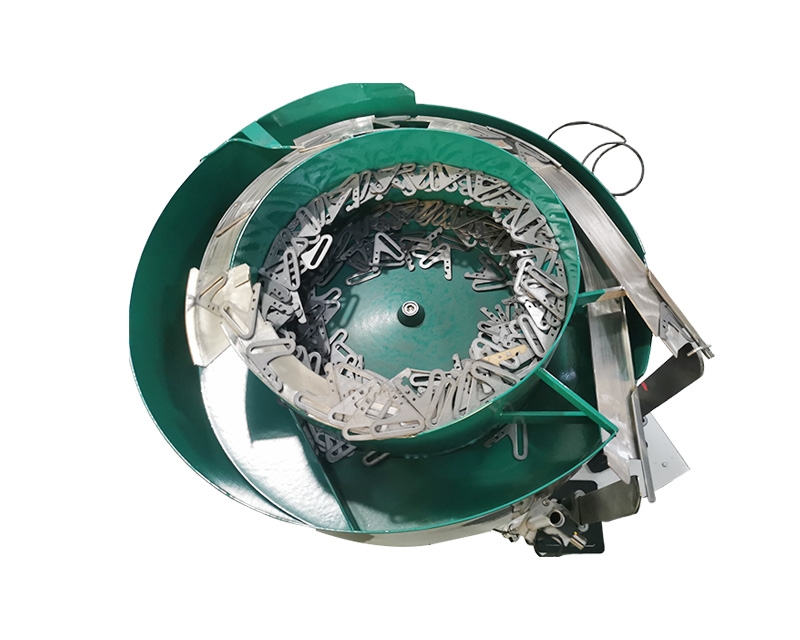
Overview
In the current booming automotive industry, automotive safety performance has become one of the core concerns for consumers. As a key component of a vehicle's passive safety system, seat belts are directly related to the safety of drivers and passengers. As the core component of seat belts, the seatbelt buckle is crucial for efficient and precise automated production. As the core device for automated fastener feeding, the seatbelt buckle vibratory bowl feeder plays an irreplaceable role in automotive parts production lines thanks to its unique technical features and functional advantages. This article will delve into the working principle, technical advantages, application scenarios, challenges faced, and future development trends of seatbelt buckle vibratory bowl feeder, providing you with a comprehensive understanding of this important piece of equipment in the automotive industry.
The seatbelt buckle vibratory bowl feeder is an automated device that integrates mechanical vibration, electrical control, and precision sorting functions. Its workflow revolves around three core steps: vibration conveying, directional sorting, and precise feeding. After the equipment is started, the vibration motor or piezoelectric ceramic plate at the bottom acts as the power source and begins working. The vibrating motor generates centrifugal force through the high-speed rotation of the eccentric block, which in turn causes vibration of the vibratory bowl feeder; Piezoelectric ceramic sheets use the inverse piezoelectric effect to cause mechanical deformation under the influence of an electric field, thereby generating vibration. This vibration is transmitted to the hopper of the vibratory bowl feeder at a specific frequency and amplitude, causing the chaotic safety belt buckles inside to move upward along the spiral track. On the spiral track of the vibratory bowl feeder, a sorting structure is specially designed for the shape, size, and structural features of the seatbelt buckle. Because seat belt buckles have unique shapes, such as the buckle body and latch tongue, the sorting structure is cleverly designed through specific grooves, bosses, and notches. When the buckle moves on the track, only fasteners with a specific posture (such as matching the latch opening direction and correct latch tongue position) can smoothly pass through the sorting structure. Clips with incorrect posture will fall back into the hopper due to gravity or vibration, re-entering the sorting process. Through multiple rounds of screening and adjustment, the seatbelt buckle is precisely aligned and positioned. Once the alignment of the safety belt buckles is completed, the belt continues along the track to the discharge port. At the discharge outlet, auxiliary mechanisms such as straight vibrators or blowing devices are usually installed. The direct vibrator delivers the clip to the designated position at a stable beat through slight vibrations; The blowing device uses compressed air to quickly and accurately blow the clips to subsequent assembly and inspection stations, ensuring the clips are supplied to the production line promptly and precisely to meet the demands of automated automotive parts manufacturing. Throughout the process, the electrical control system precisely controls the conveying speed and feeding rhythm of the clips by adjusting the frequency and amplitude of the vibrating motor, as well as the operating parameters of the linear vibrator, ensuring stable and efficient feeding.
The structure of seat belt buckles is relatively complex and requires extremely high assembly precision; any slight deviation can affect the normal use and safety performance of the seat belt. The seatbelt buckle vibratory bowl feeder achieves positioning accuracy of ±0.1mm through precise track design and precise parameter adjustment, ensuring every seatbelt buckle enters the production line in the correct posture. For example, during the assembly of the latch tongue and the main body, the vibratory bowl feeder can precisely control the opening direction of the latch and the position of the latch tongue, avoiding assembly difficulties or functional failures caused by incorrect latch posture, raising the product yield rate to over 99%, effectively ensuring the assembly quality and safety of automotive seat belts.
Compared to manual feeding or traditional disorderly feeding methods, the seat belt buckle vibratory bowl feeder offers significant feeding efficiency advantages. Under continuous operation, it can deliver 80 to 120 seatbelt buckles per minute, significantly improving production efficiency. At the same time, the vibratory bowl feeder uses high-quality materials and precision manufacturing processes, resulting in a stable structure and strong operational stability. The equipment's mean time between failures (MTBF) can exceed 8,000 hours, reducing production line downtime caused by equipment failures, ensuring production continuity, lowering maintenance costs and production delay risks for automotive parts manufacturers, and improving production efficiency.
Different car models and brands use seat belt buckles in shape, size, and structure. The seatbelt buckle vibratory bowl feeder supports highly customized design; manufacturers can personalize the shape of the hopper, track structure, sorting mechanism, and other aspects according to customers' specific requirements. For example, for compact seat belt buckles used in small compact cars, narrower and shallower rails can be designed to prevent the buckle from tumbling or jamming during transport; For larger and structurally complex buckles used in large SUV models, customized sorting structures and conveying channels can be customized to ensure precise orientation and smooth delivery. This customization capability allows the seatbelt buckle vibratory bowl feeder to widely adapt to various specifications of seat belt buckle feeding needs, meeting the diverse production requirements of automotive manufacturers.
Features
- Part-specific orientation tooling
- Adjustable vibration and flow control
- Line-integration-ready interface
Benefits
- Reduces repetitive manual handling
- Presents parts consistently to the next process
- Supports integration with automated equipment
GALLERY
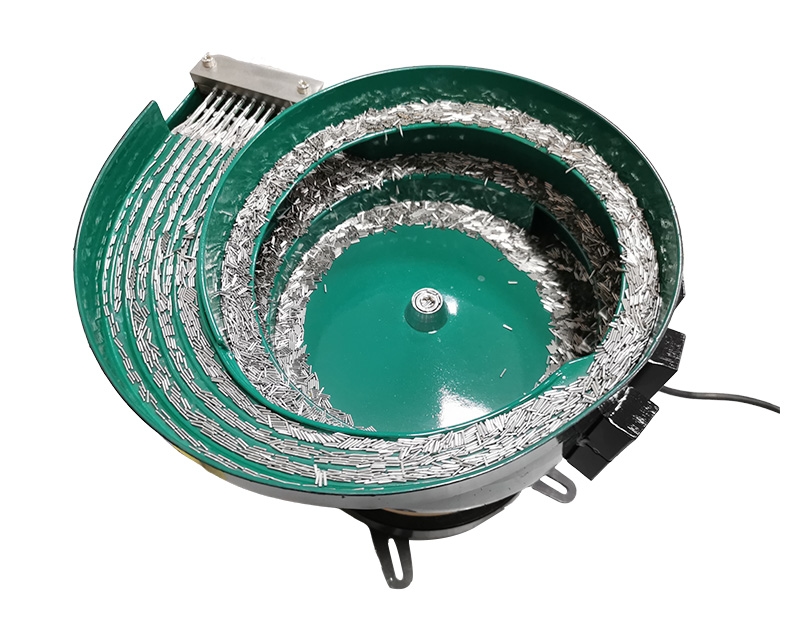
System gallery
PARTS
Supported parts
- Metal or plastic parts validated through sample testing
- Components requiring repeatable orientation
- Small and medium parts suitable for vibratory feeding
Want to evaluate this solution with your part?
Send photos, dimensions, orientation and rate. We will respond with the next technical questions.
Request a quote