TECHNICAL GUIDE
A changeover can appear complete because the next component moves successfully through the feeder. That observation does not establish that outgoing material has been controlled, that the correct tooling is installed or that the receiving station is ready for the new job. For buckle-related components, identity should remain clear across the entire supply route.
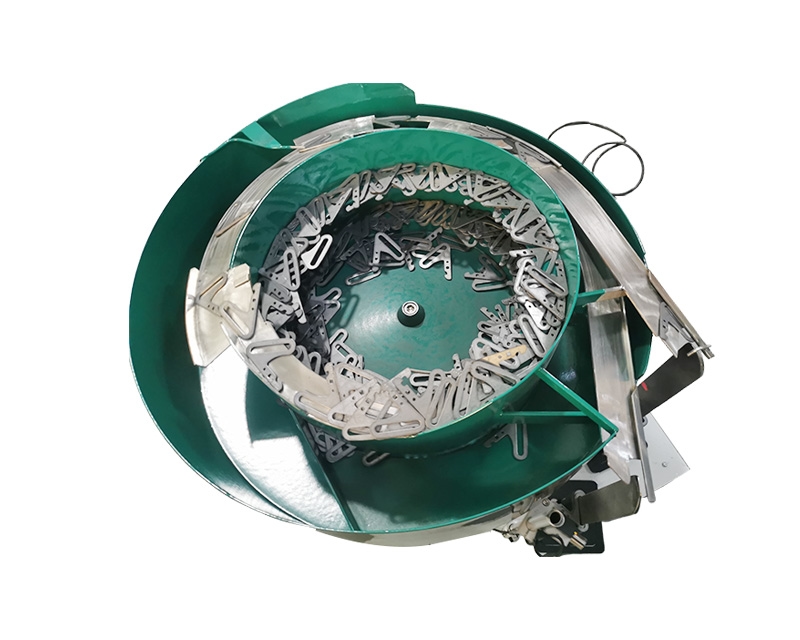
This guide supports planning for a YH-746 buckle-component feeding application. It does not replace the delivered changeover procedure or product-quality requirements. It concerns appropriately assessed non-energetic components only. All access, clearance and setup activities must follow the machine's approved safeguards and the site's authorization process.
View the application workflow diagram (conceptual illustration)
Define the changeover boundary before production
List the devices and material locations included in the job change. The boundary may extend from an incoming container through the bowl and transfer route to a receiving fixture. Do not assume that changing the feeder alone clears the entire assembly process.
Assign responsibility for each location and for the final release to production. If separate teams own the feeder and receiving machine, agree how completion is communicated. A shared checklist is useful only when each item has a clear meaning and an accountable owner.
Identify the outgoing job
Record the component reference, revision and relevant lot information before the change begins. Identify remaining material according to the site's procedure. Do not return uncertain components to a general stock container simply because they resemble the outgoing part.
Preserve the distinction between accepted unused material and components removed during a fault or intervention. Their disposition may differ. The feeding procedure should support the quality system's decision rather than creating a convenient but uncontrolled route for material back into production.
Use the approved line-clearance method
Follow the delivered procedure to establish that the defined route is ready for the next job. Some locations may not be visible from the normal operating position. Their inclusion must be handled through an approved method, not by reaching into equipment or improvising access around guards.
Do not assume that running the bowl apparently empty proves every transfer position is clear. The accepted clearance method should cover the relevant route and receiving boundary. Where confirmation is uncertain, stop the changeover and ask the responsible personnel to resolve the uncertainty before new material is introduced.
Match the tooling to the job record
Identify the required change parts and compare their markings with the approved setup information. Keep removed tooling organized so it cannot be confused with the next configuration. Similar components may require different support or orientation features even when their overall dimensions are close.
Any adjustment should be authorized and recorded according to the machine procedure. Do not use the changeover as an opportunity to modify tooling informally. A successful short run after an undocumented modification does not establish that the accepted configuration has been preserved.
Coordinate the receiving station
Confirm that the receiving fixture, tool and relevant program identification correspond to the incoming job. A feeder can present the correct component to the wrong downstream setup. Review this boundary explicitly instead of treating receiver readiness as an assumption outside the changeover.
Where a verification function is part of the system, follow its approved setup and verification procedure. Do not disable a check because it reacts differently after a change. An unexpected response should be investigated against the intended job configuration and documented requirements.
Confirm the incoming material identity
Use the approved identification method to match the new container with the job. Record the relevant revision and lot information. If the label, drawing or material appearance creates uncertainty, keep the material segregated until the responsible quality or production personnel resolve it.
Do not rely on color or a quick visual comparison when the quality process requires another identification method. Related buckle components can be difficult to distinguish casually. The feeder's ability to move an item does not demonstrate that the item belongs to the current production order.
Review first-off presentation and condition
Use the prescribed first-off process to confirm identity, delivery attitude and acceptable component condition. Evaluate the handoff at the receiving point, not just movement around the bowl. Any inspection result should be linked to the actual configuration and incoming material.
Keep feeding confirmation separate from required assembly or product-function checks. A satisfactory first presented component is not permission to omit other release requirements. Production should resume only after the applicable responsibilities have been completed and recorded.
Watch the first normal operating transitions
After the approved release, observe the normal conditions identified in the changeover plan. These may include the first replenishment or the first receiving pause. The purpose is to confirm that the accepted setup behaves as intended beyond the initial demonstration.
If an interruption appears, preserve the event information and follow the documented recovery process. Avoid repeatedly making small unrecorded adjustments. That practice can leave later shifts with a configuration that no longer matches either the approved setup or the changeover record.
Keep the record concise but complete
A useful changeover record identifies:
- Outgoing and incoming component references and revisions.
- Material lots and the disposition of remaining components.
- Completion of the approved clearance boundary.
- Tooling identities and relevant setup documentation.
- Receiving-station readiness and responsibility confirmation.
- First-off verification and any unresolved findings.
- Authorized release and subsequent corrective actions, if any.
The record should support the site's actual process, not add empty signatures. An item should be marked complete only when its defined evidence exists. If a required confirmation cannot be obtained, record the gap and keep production release with the responsible personnel.
Common questions
Can I combine outgoing and incoming material to save time?
Only follow the site's approved material-control requirements. This guide does not authorize mixing lots or variants, even if both appear to feed successfully.
Does an empty bowl prove line clearance?
Not by itself. The approved clearance boundary may include transfer and receiving locations beyond the bowl. Use the defined method for the complete route.
When should the procedure be reviewed?
Review it when component geometry, variant mix, tooling or the receiving process changes. Contact NexoFeed about YH-746 with the affected configuration and changeover observations so mechanical handling requirements can be assessed alongside the site's identity-control process.