TECHNICAL GUIDE
A request for a seat belt buckle feeder can refer to very different items: an individual component, a partly assembled item or a more complete mechanism. Those states can have different handling restrictions and delivery requirements. A useful feeding specification therefore identifies the exact component rather than relying on the finished product's name.
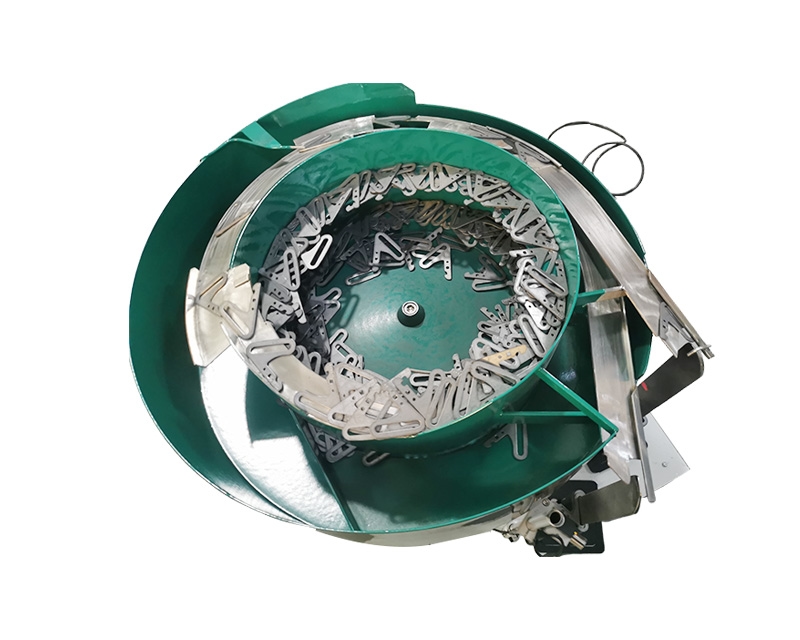
The NexoFeed YH-746 Seat Belt Buckle Vibratory Bowl Feeder is a catalog reference for an application requiring part-specific evaluation. Its listed configuration and rate are confirmed for the part and process. This article covers mechanical feeding requirements for appropriately assessed non-energetic components, not qualification of a restraint system or handling of active pretensioner assemblies.
View the application workflow diagram (conceptual illustration)
Establish the supplied component boundary
Give the feeder supplier the exact drawing, part number and revision. Identify what is already attached when the item reaches the feeder. Show any installed elements that affect balance, contact restrictions or the receiving operation, and state which assembly steps occur later.
Do not assume that a machine shown with one item can accept every buckle-related component. The phrase “seat belt buckle” describes an application family, not a universal tooling specification. The actual samples and drawing must establish what the proposed arrangement is intended to handle.
Distinguish handling from restraint performance
Autoliv's seatbelt overview identifies buckles and tongues as part of the restraint system and describes their safety role. That context explains why component handling needs controlled requirements. It does not make a feeding trial evidence of compliance or performance for the finished seat belt assembly.
Keep feeding acceptance separate from functional, dimensional and product-qualification activities. The feeder may provide the agreed orientation while another process verifies component quality or assembly function. Identify those responsibilities so a satisfactory presentation result is not used to close an unrelated safety requirement.
Mark functional and protected features
Use the drawing to identify surfaces that may support the component and features that require protection. The restrictions should come from the component owner and the approved quality requirements. Avoid describing every surface as either universally safe or universally prohibited without considering the actual part.
Ask how the proposed route maintains acceptable condition while the component is moving and while it is waiting. Pay particular attention to the handoff, where a new contact arrangement may be introduced. A sample should be reviewed through the complete handling route rather than only at the bowl exit.
Define the delivery attitude at the next operation
Show the receiving datum, required face and leading end. Include an annotated image from the viewpoint of the receiving tool. Where handed variants or other closely related forms exist, identify them individually instead of assuming that a mirrored appearance produces the same feeding behavior.
Describe the receiving fixture and tool approach. The supplier needs to know which features remain accessible and where the component is supported during transfer. A proposed orientation is not complete until it is compatible with the actual assembly or inspection operation.
Keep variant identity separate from orientation
Two variants may share a similar external shape while belonging to different jobs. A mechanism that establishes attitude does not necessarily identify the part number. Decide how incoming identity is controlled and whether a separate verification function is required at the receiving boundary.
If automatic identification is requested, define what distinction must be detected and what happens when identity is uncertain. Do not assume that a sensor used for part presence also verifies the correct variant. The inspection scope must be explicit and supported by an agreed evaluation.
Review traceability through replenishment
Describe how production containers are identified and how that identity is preserved when material enters the feeding system. The arrangement should fit the site's traceability process. The amount of recordkeeping required depends on the application's quality system, not on a generic claim made for the feeder.
Consider whether different lots can be combined and who authorizes that decision. If lot separation must be maintained, include the relevant changeover and remaining-material requirements in the project scope. These questions influence the practical operating method even when they do not change the basic feeding principle.
Supply realistic evaluation samples
Identify the samples and explain how they represent approved production. Include relevant variation and the accepted incoming condition. A polished demonstration sample may not represent the material that operators will replenish during a normal shift.
Agree how suspect or nonconforming samples will be treated during the trial. Keep their observations separate from results involving acceptable material. This allows the supplier and quality team to investigate differences without quietly broadening the component acceptance criteria to accommodate a difficult feed condition.
Evaluate pauses and recovery boundaries
Describe what the receiver does during a normal pause and what must be known before it resumes. Review the condition of components waiting at the final presentation point. A continuous demonstration does not necessarily reveal a problem associated with the first transfer after a stop.
The delivered recovery instructions should preserve a known process state. Do not design the operating concept around informal manual repositioning or bypassed confirmations. Any intervention needs an authorized procedure appropriate to the actual machine and the site's protective measures.
Build a selection checklist
Before requesting a proposal, assemble:
- Component reference, revision and actual assembly state.
- Drawings marking the delivery pose and protected features.
- Representative samples with traceable identification.
- Variant boundaries and any required identity verification.
- Receiving-tool drawings and interface responsibilities.
- Replenishment, lot-control and changeover requirements.
- Separate acceptance criteria for handling and product quality.
Use this information to evaluate the proposed arrangement on a consistent basis. Keep unsupported assumptions out of the purchase description, especially claims that mechanical feeding alone guarantees a finished safety component's performance.
Questions buyers often ask
Does YH-746 automatically qualify the buckle assembly?
No. The catalog reference concerns feeding. Product qualification and required functional checks remain separate responsibilities within the manufacturing and quality process.
Can similar variants share one arrangement?
That requires evaluation. Similar appearance does not establish compatible orientation, protection or identity control. Confirm the accepted variant set explicitly.
What is the next step?
Request a YH-746 application review with the exact component drawing and receiving requirement. Begin with the part that will actually be fed, and keep mechanical presentation, traceability and product qualification clearly distinguished throughout the project.