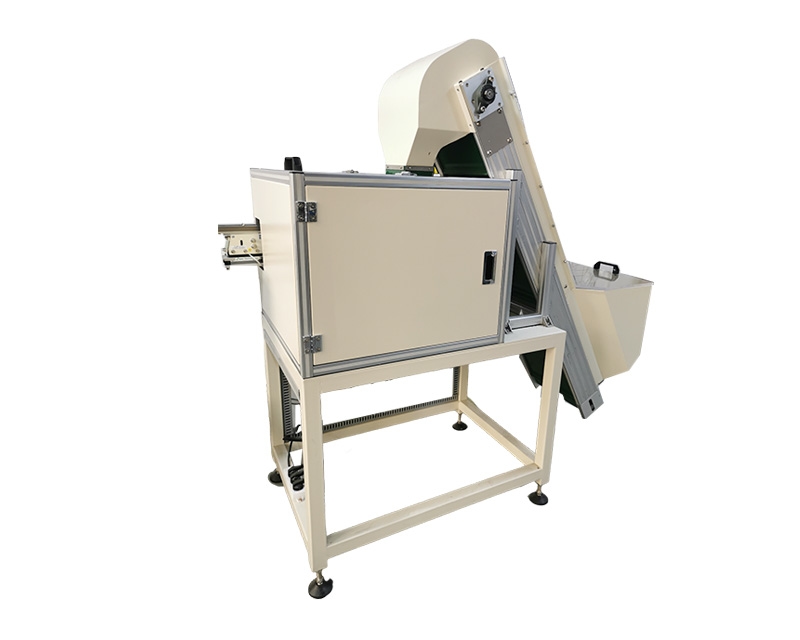
GUÍA TÉCNICA
When an empty tube arrives at a receiving station in an unexpected condition, the first question is where that difference became visible. Changing a feeder setting before establishing the incoming condition can make the investigation harder. A simple, traceable observation record helps distinguish a material issue from a handling or handoff issue.
This guide concerns empty, inert, non-energetic components considered for the NexoFeed YH-763 application. It does not address loaded igniters or active assemblies, and it does not establish their equipment compatibility. Use only an application whose component state and equipment scope have been confirmed by the responsible parties.
View the application workflow diagram (conceptual illustration)
Begin with identity and the approved requirement
Record the component reference, revision, lot and supplied state before comparing observations. Confirm that the samples belong to the job under investigation. A record describing only “tube damage” may mix unrelated components or conditions and lead to a misleading explanation.
Keep the accepted requirement beside the observation. Use the approved drawing or quality instruction to decide what is acceptable. This article does not provide dimensional tolerances or cosmetic limits. Those criteria belong to the component owner and should not be changed merely to make a feeding trial appear satisfactory.
Establish what arrived at the machine
Review representative incoming components using the site's approved inspection approach. Record visible condition and any required measurements consistently. Preserve the distinction between an observation, such as a marked edge, and an interpretation, such as an assumed impact during feeding.
Note relevant container and lot information without assuming causation. If a condition is already present before machine entry, the investigation should include the incoming-material process. That does not automatically exclude a later handling contribution, but it prevents the feeder from becoming the default explanation for every downstream finding.
Make comparisons genuinely comparable
Use consistent viewpoints, lighting and identification when taking photographs. Include the component reference in the record rather than relying on memory. If measurements are required, use the site's approved method and equipment, with the same defined feature assessed at each comparison point.
Do not claim a change solely because two photographs look different under different conditions. An inconsistent comparison may create an apparent defect or hide a real one. The aim is to produce evidence that the quality and equipment teams can interpret without needing to reconstruct how it was collected.
Locate the first observable difference
Plan observation points with the equipment supplier and the site's responsible team. The points should help separate incoming condition, delivery from the feeder and receipt by the next station. Use approved access and isolation procedures whenever physical inspection or access is required.
Never reach into moving equipment or bypass protective measures to obtain a better view. If a location cannot be observed safely using the available arrangement, record that limitation and seek an approved method. An incomplete but trustworthy record is preferable to an unsafe or uncontrolled investigation.
Separate presentation errors from condition findings
A component can be presented incorrectly without being dimensionally nonconforming, and an apparently well-presented component can still fail a quality requirement. Keep these findings in separate fields. Otherwise, improvements in orientation may conceal a condition issue that remains unresolved.
Describe the receiving event precisely. Record whether the item was available in the expected pose, whether the receiver accepted it and what condition was observed afterward. Avoid using one broad label, such as “jam,” for several distinct events requiring different evidence and different corrective actions.
Include waiting and interrupted production
Compare normal continuous delivery with the agreed start, pause and recovery conditions. Record when an observation occurred relative to those events. A condition that appears only after a receiver pause may need a different investigation from one present throughout steady operation.
Do not infer the mechanism from timing alone. Timing is a clue, not proof of cause. Combine it with the component observations, machine state and receiving-station information. Ask the supplier to review the evidence before making changes outside the delivered operating instructions.
Keep adjustments controlled and documented
Where the approved procedure permits an adjustment, identify the authorized person, starting condition and intended observation. Keep the record specific enough to distinguish that change from unrelated material or receiver changes. Do not provide or follow generic settings that disregard the actual machine configuration.
Avoid combining several changes and then attributing the result to one of them. A controlled comparison is easier to interpret and easier to repeat. If a change does not produce the intended outcome, follow the approved process for restoring a known configuration and escalating the investigation.
Preserve suspect material for a quality decision
Keep suspect components identified and controlled under the site's quality procedure. Do not return them to production simply because they feed successfully on another attempt. Feedability is not a replacement for the component's acceptance criteria.
Likewise, do not straighten, reshape, clean or otherwise rework a component using an improvised method. Any disposition or rework decision belongs to an approved process. The investigation should preserve useful evidence rather than alter the parts before the responsible team can assess them.
Create a concise investigation record
Include the following information:
- Component identity, revision, lot and confirmed empty state.
- The approved requirement associated with the finding.
- Incoming and subsequent observations made consistently.
- The first point where a difference was documented.
- Machine and receiver states at the relevant time.
- Authorized interventions and the result of each comparison.
- Material disposition and the agreed follow-up action.
Share this record with both the feeder supplier and the receiving-equipment owner when the boundary is involved. A joint review prevents one team from treating the other team's unverified assumption as an established fact.
Questions production teams often ask
Does a successful transfer prove acceptable component quality?
No. Transfer success and component acceptance answer different questions. Apply the approved quality checks independently of the observation that an empty tube moved through the system.
Should the feeder always be adjusted first?
No. Establish identity, incoming condition and the observed event first. Then use the documented evidence to decide which authorized investigation or adjustment is appropriate.
What should I send for technical support?
Contact NexoFeed about the YH-763 application with the identified component, approved requirement and observation record. Clear evidence helps the responsible teams investigate the actual empty-component handling boundary without extending conclusions to a different material state or process.