GUÍA TÉCNICA
A short video of moving parts is useful for illustrating an automated feeding concept, but it is not a complete acceptance record. A production system must be evaluated against its agreed responsibilities, including delivery condition, receiving behavior and the response to ordinary interruptions. The test should make those expectations observable.
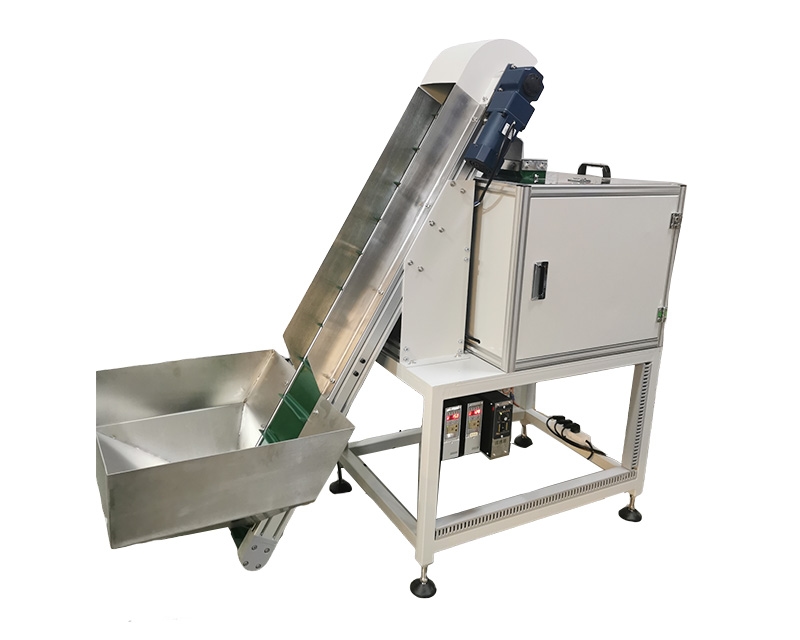
For a NexoFeed YH-774 Automated Parts Feeding System, the catalog states that configuration and rate are confirmed for the application. This guide explains how a purchaser and supplier can organize that confirmation. It is a planning framework, not a prescribed test standard or a substitute for machine-specific safety assessment.
View the application workflow diagram (conceptual illustration)
Agree what is being accepted
Start with the approved scope and identify the equipment actually present at the test. If the final receiving machine is unavailable, document what represents its interface and which conclusions remain provisional. A simulation of a receiving signal is not the same as demonstrating the full mechanical transfer.
Separate acceptance of the feeding system from approval of the finished product. Correct component presentation does not prove that a later assembly operation meets all quality requirements. List responsibilities so neither team accidentally treats one acceptance activity as evidence for a different process.
Establish the test configuration
Record component references, revisions, tooling identities and the relevant configuration documents. Include the receiving fixture or representative interface. The purpose is to make the tested arrangement identifiable after shipment, installation or subsequent maintenance.
Preserve the agreed baseline before testing begins. If a change is necessary, document why it was made and which observations must be repeated. Otherwise, results from several different configurations can become mixed into a report that appears consistent but cannot be reproduced.
Choose samples that represent production
Use parts that reflect the approved incoming conditions and variants. Label their origin and identify any limitations in the available sample set. Do not describe a trial with specially selected components as proof of performance across variation that was never included.
Agree responsibility for evaluating suspect samples. If a component is outside its own drawing requirements, record that condition separately from a feeding failure involving acceptable material. This distinction supports useful decisions without turning the trial into an argument over unclassified parts.
Define useful output at the handoff
State where output is counted and what makes a delivered part acceptable. A connector or pin moving past a point upstream is not necessarily available in the required pose at the receiver. The counting boundary should match the actual responsibility being evaluated.
Define how interruptions and manual interventions are recorded. A total output count without an event history can conceal repeated operator assistance. The agreed record should distinguish normal replenishment from corrective actions and explain whether any activity affects the interpretation of the results.
Include relevant production scenarios
A useful plan goes beyond uninterrupted running. Select scenarios from the actual operating requirements, such as normal startup, routine replenishment, a receiving pause, restart and approved changeover. Do not invent severe conditions unrelated to the intended use merely to make the test appear comprehensive.
For each scenario, specify the starting state, expected behavior and evidence to collect. Keep the procedure within the delivered safeguards. Any challenge of protective functions or fault responses must be planned and performed by qualified personnel under the applicable validation process, not improvised during a customer demonstration.
Review waiting and restart behavior
Observe where parts remain when the receiver pauses and how their condition is maintained. On restart, check that the first transfer follows the defined sequence. An orderly queue during steady production does not necessarily show that the system resumes correctly after a stop.
Record any uncertain state explicitly. If neither device can establish whether a part occupies the receiving position, that is a finding requiring resolution. Do not close it simply because an operator knows how to make the system continue through an undocumented action.
Inspect the delivered components
Evaluate component condition using the agreed inspection method. The test should address protected surfaces and relevant handling restrictions as well as presentation. Movement alone is insufficient if a delivered part no longer meets its accepted condition.
Define how samples are retained or identified when an issue is found. Link the observation to its scenario and configuration. This creates evidence for the responsible engineers without assuming that every mark arose in the feeder or that every visible difference is necessarily unacceptable.
Record findings in a usable format
For each issue, capture:
- The scenario and configuration in use.
- The first observable difference from expected behavior.
- The affected component reference and sample group.
- Relevant indications, alarms or interface states.
- Any operator or technician intervention.
- The agreed owner, corrective action and verification requirement.
- The final disposition and supporting evidence.
Avoid closing an issue with a vague statement such as “adjusted and okay.” State what was corrected and which test demonstrated the result. Keep unresolved items visible, including items that depend on the final receiving equipment or installation environment.
Plan the installation follow-up
A successful factory trial does not remove the need to check the installed interfaces. Shipping, positioning and connection to the actual receiver introduce conditions that should be reviewed against the accepted configuration. Agree the relevant follow-up before the equipment leaves the supplier.
The handover should include the appropriate operating information, configuration records and responsibility contacts. Confirm how future changes will be reviewed. This helps prevent a well-documented acceptance result from losing its meaning after an unrecorded tooling or sequence modification.
Common acceptance questions
Is there one universal run duration?
No universal duration is established here. The parties should agree a test plan appropriate to the application, variation and required evidence. A duration alone does not define test quality.
Should every interruption be hidden from the final result?
No. Record interventions transparently and interpret them according to the agreed acceptance criteria. Concealing them prevents a realistic assessment of the system.
What should I send before the review?
Contact NexoFeed about YH-774 with the proposed acceptance boundary, sample information and receiving sequence. An agreed plan makes the demonstration a shared engineering assessment rather than a disagreement about what moving parts were supposed to prove.